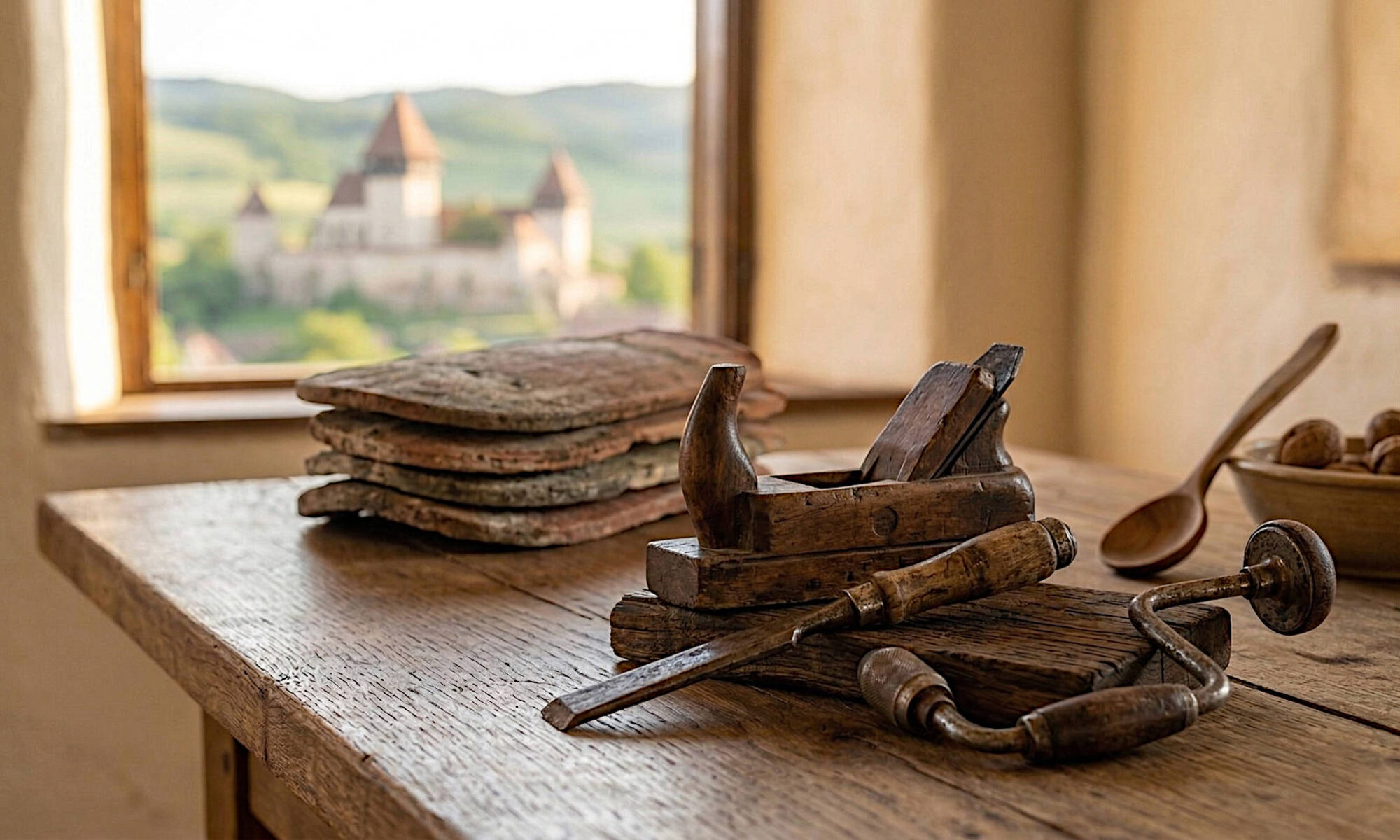
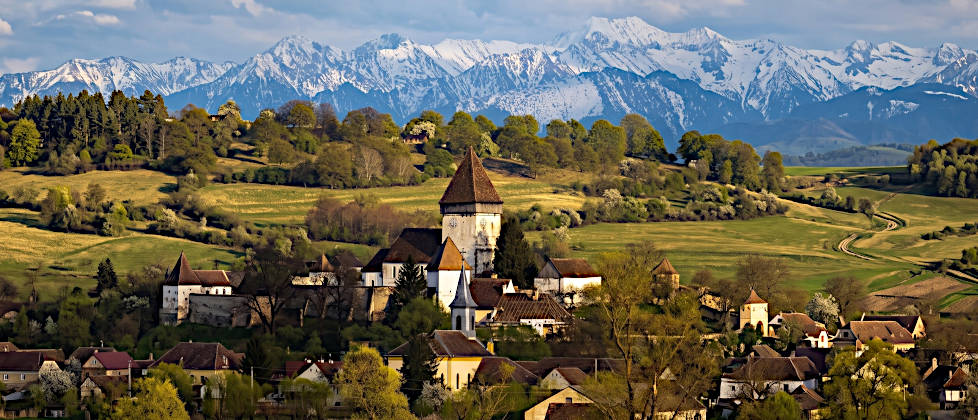
When the fine mist of the morning slowly rises from the valleys and the cool light of dawn bathes the rolling hills of Transylvania in a pale blue, one experiences the true soul of this region. It is a silence broken only by the distant barking of a dog or the monotonous clattering of a horse-drawn cart making its way over the uneven village roads. Here, in the heart of Romania and far away from the main tourist routes, which mostly concentrate around the well-known castles and vibrant cities like Brașov or Sibiu, lies hidden a landscape that captivates individualists and travelers seeking tranquility alike: The Hârtibaciu Valley.
In this secluded area, an architectural heritage reaches into the sky that is unparalleled throughout Europe. It is the fortified churches in the Hârtibaciu Valley that have stood as stone guardians over the small villages for centuries. For me, this region is not just another destination on the map. It is a living, walkable museum of European building history and a place that grounds and fascinates me anew with every visit.
Anyone who has ever mixed historical lime plaster by hand, checked its consistency, or carefully repointed centuries-old, heavy field-baked bricks, looks at these massive walls with completely different eyes. The craftsmanship that went into the fortified buildings of Transylvania bears witness to a deep, instinctive understanding of regional materials, statics, and above all, longevity. In this article, I will take you on an extensive journey through the valley of the Hârtibaciu and show you how to photographically capture the hidden textures, the rough surfaces, and the majestic architecture of these structures—especially the monumental fortified church of Cincu—in a demanding way.
The Hârtibaciu Valley: A Landscape Beyond Time
The Hârtibaciu Valley extends geographically in the center of Romania. It is bordered by the cities of Sibiu to the west, the medieval pearl Sighișoara to the north, and Făgăraș to the south. While the partly snow-capped peaks of the Carpathian Mountains form a natural, dramatic barrier in the distance, the valley itself presents a gently rolling, almost lovely cultural landscape.
The roads here lead through dense, jungle-like deciduous forests, open up again and again after the next bend for wide, unobstructed views over agricultural lands, and lead into villages where time seems to beat to a completely different rhythm. Mass tourism has not yet found its way here. There are no huge souvenir shops selling plastic vampires, no overcrowded parking lots, and only very rarely do you see lost tour buses. Instead, you encounter people who are deeply rooted in their land and the seasons.
The infrastructure can be challenging in places; by no means is every road flawlessly paved. Potholes, gravel tracks, and unexpected bottlenecks are part of the daily agenda. But it is exactly this imperfection that makes a trip here so unfiltered and authentic. You have to earn the impressions, you have to be willing to engage with the rhythm of the region, which is dictated not by appointment calendars, but by the weather and agriculture. For travelers seeking the genuine and unadulterated, the fortified churches in the Hârtibaciu Valley are an absolute revelation.
The Anatomy of the Fortified Churches: Survival Behind Thick Walls
To truly understand the massive architecture of the fortified churches in the Hârtibaciu Valley, one must dive deep into the turbulent history of the region. Starting in the 12th century, Hungarian kings called German settlers, the so-called Transylvanian Saxons, into the then sparsely populated land. Their task was clearly defined: they were to secure the borders of the empire against constant incursions from the east and south—primarily by Ottoman and Tatar armies—and cultivate the land.
Since the individual village communities generally did not have the financial means, the manpower, or the strategic power to build extensive defense systems or city walls for the entire village, they made a pragmatic decision: they concentrated all resources on the most solid and important building in the place—the church.
Over the centuries, these houses of worship were expanded from simple basilicas into massive, multifunctional fortresses. High, double ring walls were built, defensive towers were erected at strategic corners, and defense elements such as machicolations and loopholes were installed. But perhaps the most fascinating and architecturally interesting element of these complexes is their function as storage buildings.
The Bacon Tower: The Refrigerator of the Middle Ages
In the event of a siege, the entire village community often had to survive for weeks, sometimes months, within the protective walls. The massive towers and fortified additions therefore served not only purely military defense, but primarily the safe storage of provisions. The so-called Bacon Tower, in which every family of the village kept their cured and smoked meat supplies, remains to this day in many complexes a silent witness to this existential survival strategy.
Every family had their own marked nail there. Grain, wine, lard, and other vital goods were stored in huge wooden chests, carved from whole tree trunks, in the dark, cool rooms protected by stone walls meters thick. This clever stockpiling ensured survival when the fields around the village burned.
Material Science: Why Field-Baked Bricks and Lime Plaster?
When you step close to the walls, you recognize the genius of the historical builders. The construction of these massive buildings relied exclusively on regional, extremely resistant materials. Pure clay construction was omitted for the defensive outer walls. In this massive form, clay would not have permanently withstood the damp, snowy, and bitterly cold Transylvanian winters without generating massive maintenance efforts.
Instead, tons of rubble stone from nearby quarries, solid field-baked bricks, and breathable, tough lime plaster characterize the picture. The field-baked bricks, which were fired in simple kilns on site, exhibit enormous flexibility and vary in their coloring—from bright orange to deep, almost black red, depending on how close they were to the fire of the kiln.
This masonry was bound with clay or pure lime mortar. This traditional lime is the actual secret of longevity. It is flexible enough to absorb the slight settling movements of the massive buildings over centuries without immediately cracking deeply. Above all, however, it is open to capillary action: it allows the thick walls to release penetrated moisture back to the outside and keeps the room climate in the storage rooms stable. Exactly these historical surfaces, which have developed an incomparable patina of lichens, washouts, and repairs over the centuries, offer an unparalleled motif for texture and architectural photography today.
Cincu (Großschenk): Romanesque Heft and Gothic Elegance
When you approach the village of Cincu via the winding country roads, you will catch sight of the silhouette of the imposing fortified church from afar. It sits massively on a hill right in the center of the town and dominates the landscape. It is one of the largest, most fortified, and historically significant castles in the entire Hârtibaciu Valley. Cincu was once the administrative, judicial, and artisanal center of the so-called Schenker Stuhl, which explains the former wealth and the sheer size of the complex.
The St. Mary’s Church, originally built in the 13th century, is at its core a massive Romanesque basilica. When you step into the courtyard, you immediately feel the weight of history. The architecture is characterized by a fascinating, sometimes almost contradictory mixture: the massive, round arches and thick walls of early Romanesque architecture meet the later, more pointed, and elegant forms of Gothic alterations.
The mighty west tower, which originally served “only” as a bell tower, was upgraded to a fortress in the turbulent times of later centuries with wooden defensive corridors and narrow loopholes. Particularly impressive are the traces of time on the massive facades. The lime plaster is peeling off in some exposed places and reveals the complex inner life of the wall: the precise pattern of the field-baked bricks and the roughly hewn stone. This natural, unvarnished patina is not a sign of mere decay, but the monument of a building that has stood firm against countless storms, sieges, and the passage of centuries.
The window openings on the outside are narrow and cut deep into the thick walls to avoid offering a target for enemy arrows or musket balls. However, when you step inside the church, you are enveloped by a surprising coolness, in which the incoming, focused light makes the stirred-up dust dance in the air. The wooden galleries and the old church pews breathe the smell of dry wood and cold stone.
Other Masterpieces Along the Route
Although Cincu undoubtedly stands out due to its sheer size and massive construction, the landscape of the fortified churches in the Hârtibaciu Valley offers ample room for many more architectural discoveries. Over the generations, each village community has given its complex a completely unique, unmistakable character, heavily dependent on the local topography and the available financial means of the community.
Alțâna (Alzen): Attention to Detail in the Masonry
In Alțâna, a fortified church awaits you that at first glance appears less massive than Cincu, but instead boasts incredible details. The complex is known for its well-preserved ring walls and the fine stonemasonry work that can still be seen on the portals. The structure of the historical mortar between the fieldstones is particularly well suited for study here. Take the time to walk around the church; from the back, where the terrain slopes slightly, there are great perspectives of the staggered roofs of the fortifications.
Agnita (Agnetheln): The Fortified Towers of the Guilds
In the geographical center lies the small town of Agnita. The locally massive-looking fortified church immediately stands out due to its four prominent, heavily fortified defense towers. The fascinating thing about this: historically, each of these towers was financed, militarily defended, and maintained in times of peace by a specific local craft guild (the blacksmiths, tailors, shoemakers, and coopers). The architecture here is noticeably more urban and orderly than in the purely agricultural villages. One finds wonderful, geometrically strict motifs in the wooden defensive corridors safely hidden beneath the large roofs of the towers.
Hosman (Holzmengen): A Postcard Motif with Depth
Hosman offers perhaps one of the most classic and well-known sights in all of Transylvania. When you approach the village from the west, the mighty towers of the fortified church line up against the breathtaking, often snow-capped panorama of the Făgăraș Mountains. The complex itself has a very complex structure with double ring walls. The historical lime plaster has formed an almost organic-looking, wavy surface here over the centuries. On damp, foggy autumn mornings, when the tall grass in the courtyard is still wet from the cold dew, particularly melancholic, quiet, and dense atmospheres can be captured here with the camera.
Photographic Texture Studies: A Technical Guide
For you, when you are traveling with a camera and want to shoot more than just quick souvenir photos, the fortified churches in the Hârtibaciu Valley offer an absolutely inexhaustible reservoir of complex motifs. The appeal here lies not in the frantic snapshot, but in the quiet, detailed elaboration of shapes, lines, and especially materials. The rough, unvarnished surfaces, the irregular joints of the mortar, and the archaic, heavy constructions demand a very conscious and precise image composition.
The absolute secret of outstanding architectural and detail photography in these historical places lies in the light. Avoid the harsh midday sun at all costs; it swallows the fine textures of the stones and casts unattractive, pitch-black, and hard shadows. The soft, directional morning or late evening light, on the other hand, grazes flat across the walls. It highlights every little unevenness in the historical lime plaster, makes the red tones of the field-baked bricks glow warmly, and gives the massive, gray stone an almost tangible, three-dimensional plasticity.
Below I have put together a technical schedule to optimally master the photographic challenges on site.
Mastering the Dynamic Range
When you step out of the brightly lit courtyard on a sunny day into the interior of a dark defense tower or into the nave of the church, the camera’s sensor reaches its physical limits. The narrow loopholes or colorful church windows often burn out completely in the image and become white spots (clipping), while the dark, soot-blackened wooden beams of the massive ceiling construction sink into pure black, where no details are recognizable anymore.
This is exactly where the exposure bracketing technique mentioned in the schema above is the solution. Pay strict attention that you do not move the tripod during the entire shooting series; it is best to use a remote release or the camera’s timer. The subsequent blending of the images on the computer (Exposure Fusion) should be extremely subtle and with a lot of tact. The goal is not to create an artificially looking, brightly colored, and unnatural HDR image in the style of the 2010s. The goal is to reproduce the gloomy, mysterious, and sometimes oppressive atmosphere of the historical room exactly as your human eye perceived it on site.
Practical Travel Information for Individualists
A trip to the fortified churches in the Hârtibaciu Valley requires a little preparation and flexibility, unlike a city trip. In direct contrast to highly frequented tourist destinations like Bran Castle, the heavy oak gates of the fortified churches are not automatically open from 9 am to 5 pm. This is not a sign of a lack of hospitality from the Romanians, but simply due to the fact that the Protestant congregations in the villages today often consist of only a handful of people and there is no budget for permanent supervisory staff.
- The Key Power: On almost every closed gate of a fortified church in the valley you will find a board or a handwritten note with a phone number. The so-called castle keeper—often an older resident of the village, sometimes the pastor himself—keeps the key. A quick phone call is enough. Usually, a few minutes later someone arrives with an impressively large, heavy, and antique iron key to open the creaking gates for you. Exactly this personal, often very warm contact is quite frequently the absolute highlight of the visit. Sometimes a small entrance fee is charged, or you have the opportunity to leave an appropriate, voluntary donation in the donation box for the preservation of the church.
- Accommodations and Food: You will look in vain for large, anonymous hotel chains in the Hârtibaciu Valley. Instead, the region offers a slowly growing number of very lovingly and professionally restored guesthouses, which often preserve traditional building methods. Sleeping in a room whose walls are still plastered with old methods and features an old tiled stove perfectly rounds off the travel experience. Look for small pensions (“Pensiune”) in places like Hosman, Alțâna, or Cincu itself. You can also rely on local products when eating; the agricultural character of the region provides fantastic, unadulterated food.
- Respectful Interaction: The fortified churches, even if they often look like fortresses, are not abandoned ruins or mere backdrops. They are still consecrated places, cemeteries, and the emotional, historical center of the remaining Saxon communities. Respectful behavior should be a matter of course for every traveler. Avoid loud shouting in the courtyard, do not enter cordoned-off or dilapidated areas (risk of falling!), and leave the places as you found them.
- Resources for Preparation: If you want to read up in detail beforehand, I highly recommend the pages of the Fortified Churches Foundation. If information is missing there or you are unsure about historical facts, research in specialist literature or contact local historians. I do not have sufficient information to answer every single family tree of the Saxon families, but the foundation makes an outstanding, scientifically sound contribution to the preservation of this world cultural heritage and offers excellent, in-depth background information on the individual locations and ongoing conservation projects.
Closing Thoughts
The Hârtibaciu Valley does not give away its secrets and its beauty lightly while driving quickly past. It gently forces you to slow down, to look closely, and to linger. When you have stood for hours in the damp coolness of a fortified bacon tower just to wait for the perfect, dramatic incidence of light through a narrow loophole onto the stone floor, or when you have run your fingertips in fascination over the rough, hand-formed field-baked bricks in the courtyard of Cincu, you begin to understand the soul of this region. It is the unpretentious constancy, the stoic calm that makes these structures so incredibly fascinating in a rapidly changing world.
For photographers, for lovers of historical architecture, and for all those travelers who seek the truly authentic far off the big, strictly planned stages, the Romanian Hârtibaciu Valley is a place you rarely travel to only once. The fortified, thick walls, the quiet, grass-grown courtyards, and the incomparably soft, clear Romanian morning light leave impressions that stay deep in the memory and resonate for a long time. Take the time, plan your route carefully, open your eyes to the inconspicuous details in stone and plaster, and let yourself be captivated by the rough, melancholic beauty of Transylvania.