West of the lively university city of Cluj-Napoca in Romania, a mountain world rises where the clocks noticeably tick slower. The Apuseni Mountains, also known as the Western Carpathians, harbor a cultural and landscape jewel: Țara Moților, the Land of the Moți. If you are looking for a destination off the beaten path that immerses you deeply in an archaic way of life, this region is one of the most pristine experiences you can still have in Europe.
Who are the Moți and what defines their culture?
The Moți are the inhabitants of the higher-altitude villages in the Apuseni Mountains, especially around the Arieș River valley. For centuries, their lives have been inextricably linked to the forest and wood as a material. This deep connection to nature shapes not only the architecture of the region but their entire daily life.
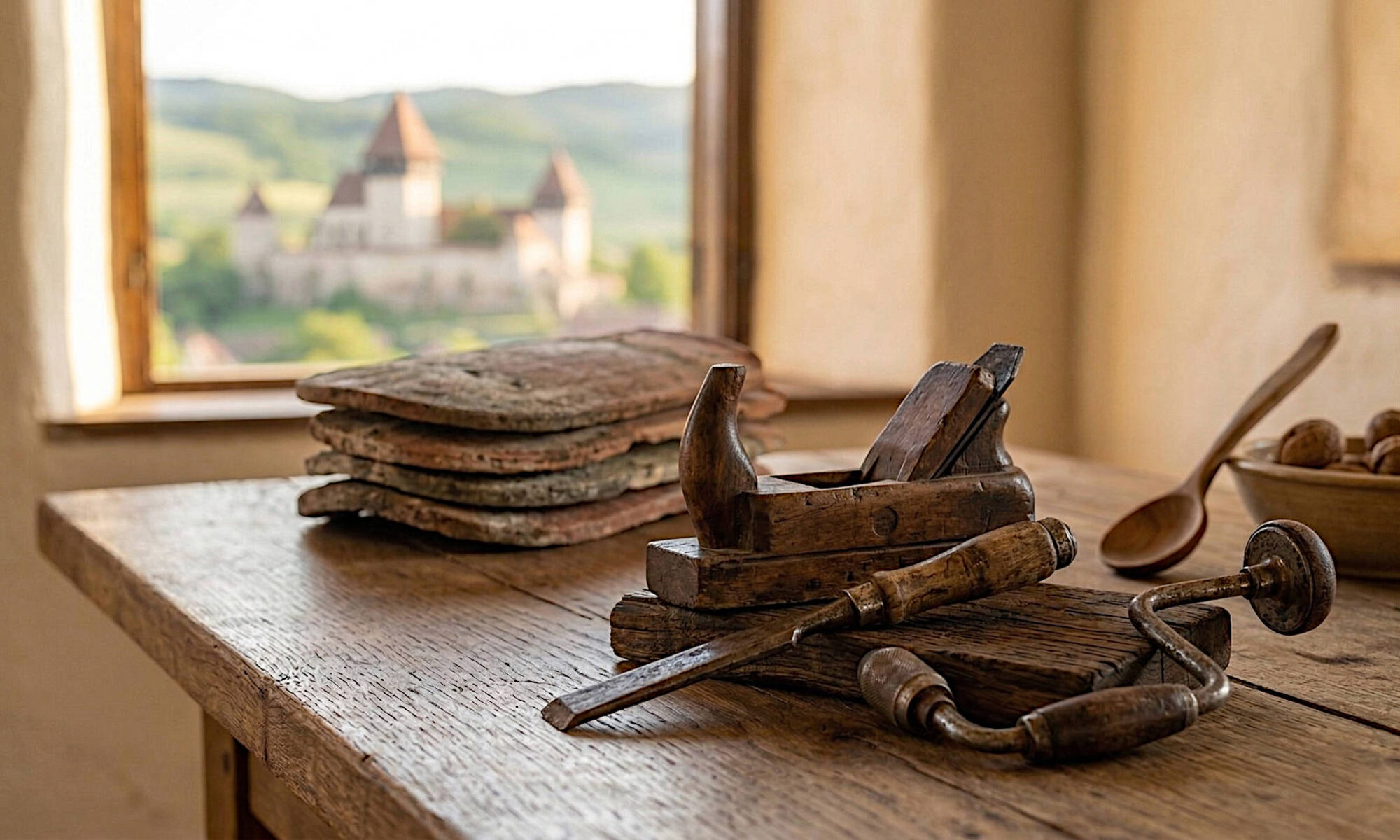
While many traditional crafts in Europe can only be found in museums, the wooden culture in Țara Moților is alive. The people here are masters of woodworking. From spruce trunks, they carve, turn, and build almost everything they need to live: from delicate wooden shingles to massive wooden barrels and agricultural tools, right up to their typical houses.
A special symbol of this culture is the Tulnic, a wind instrument up to three meters long made of spruce wood, similar to the Swiss alphorn. Originally, it was used by women to communicate across the wide valleys, warn of dangers, or call the flocks of sheep. With a little luck, you might hear the deep, melancholic tones of a tulnic echoing through the forests during your visit.
An archaic way of life amidst rugged nature
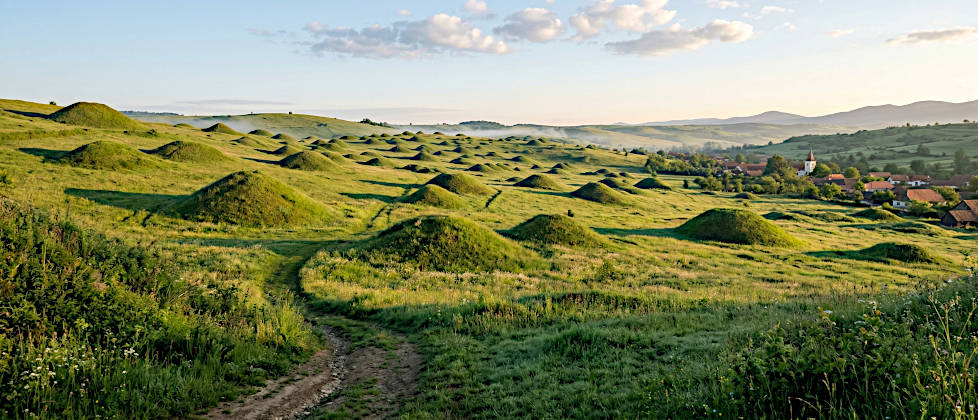
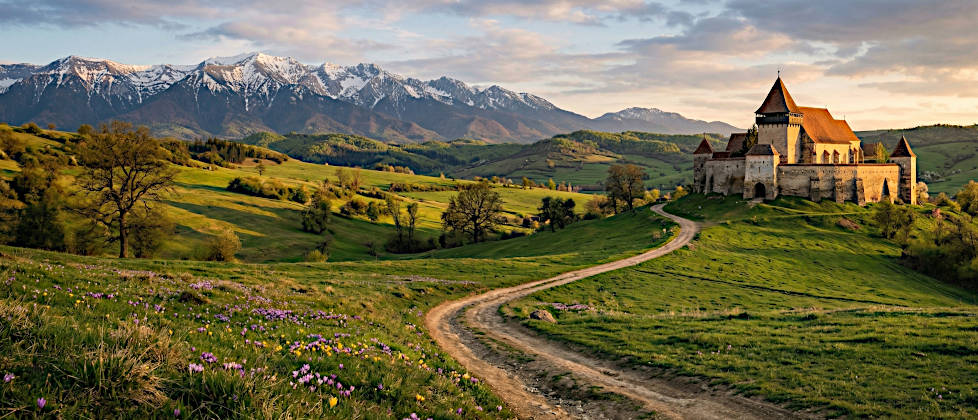
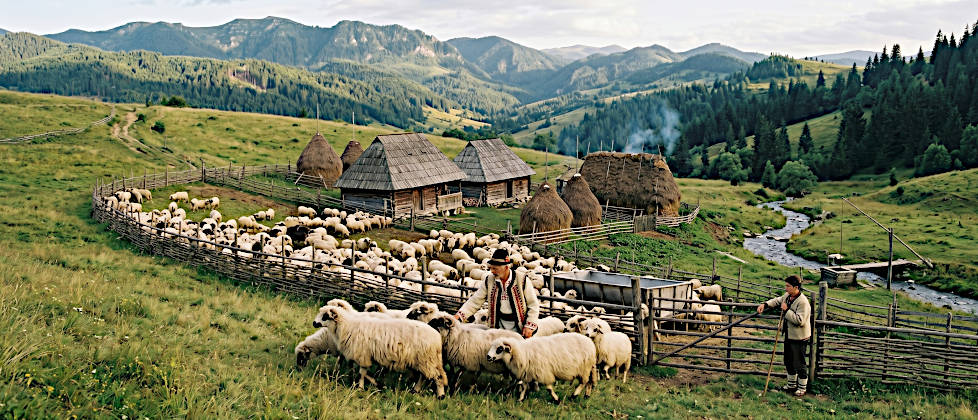
A trip to Țara Moților is like a journey to another era. The landscape is characterized by dense coniferous forests, deep karst caves, and wide, rolling alpine meadows where hay is still often mowed by hand and piled into characteristic hayricks. The villages are often widely scattered; some farmsteads can only be reached via unpaved dirt roads or steep paths.
Life here follows the rhythms of the seasons. In summer, the livestock moves to the high pastures, and the hay harvest dictates the daily routine. In the harsh, snowy winter, people huddle together in wood-heated parlors and dedicate themselves to crafts. It is a life of privation, but also one deeply connected to nature. If you embrace it and connect with the locals—even if communication often relies on hand gestures—you will experience incredible hospitality.
My tip: Photographing the Ploștini and the best time to travel
As a photographer, your heart will certainly beat faster in this region. A very special subject are the so-called Ploștini. These are old, traditional summer huts and stables that stand out due to their extremely steep, massive thatched roofs (sometimes also shingled roofs). You can still find them on the more remote plateaus, for example around the village of Gârda de Sus or in the hamlet of Casa de Piatră.
On photography: Forget the harsh midday light. When the sun is really low—whether in the morning or evening—the extreme textures of the old wood and thick thatched roofs truly pop. Definitely pack something wide-angle in your backpack. The landscape is vast, and you’ll often want a hut in the foreground and the wide valley behind it in the frame. As for the local people: keep your camera down at first. An honest hello, a smile, and a quick request, even if it takes hands and feet, work wonders before you press the shutter.
The best time to travel: When is the best time to go? For good pictures, May and June are particularly worthwhile when everything is really lush and green, or September and October. In autumn, you not only have colored foliage but often quite usable light throughout the day. In midsummer, the air frequently shimmers and it gets very hot, and in winter, you simply get stuck in deep snow on the remote dirt tracks.
Planning your trip: Points of contact and information sources
Since Țara Moților has not yet been swept up by mass tourism, a trip there requires a little preparation. Your journey ideally begins in Cluj-Napoca, which has an international airport. From there, you can reach the foothills of the Apuseni Mountains by rental car in about two to three hours.
Good starting points for exploration are the municipalities of Albac, Gârda de Sus, or Arieșeni. Here you will find authentic, often family-run guesthouses (pensiuni) where you can try the regional cuisine—this often includes homemade cheese, polenta (mămăligă), and a strong fruit brandy (pălincă).
Here are some useful links for your further research:
- Apuseni Nature Park (Parcul Natural Apuseni): On the official website, you will find (mostly in Romanian and English) information about hiking trails, caves, and protected areas. www.parculapuseni.ro
- Romanian Tourist Board: Offers good, general English overviews of the region and culture. romaniatourism.com
Let yourself be drawn into the Țara Moților adventure. It is a place that will ground you and show you how much strength and beauty lies in a traditional, simple way of life. Take your time, pack your camera, and discover this forgotten valley in the heart of Europe.