Destination Țara Moților: Discovering the Fascinating Wooden Culture in the Land of the Moți

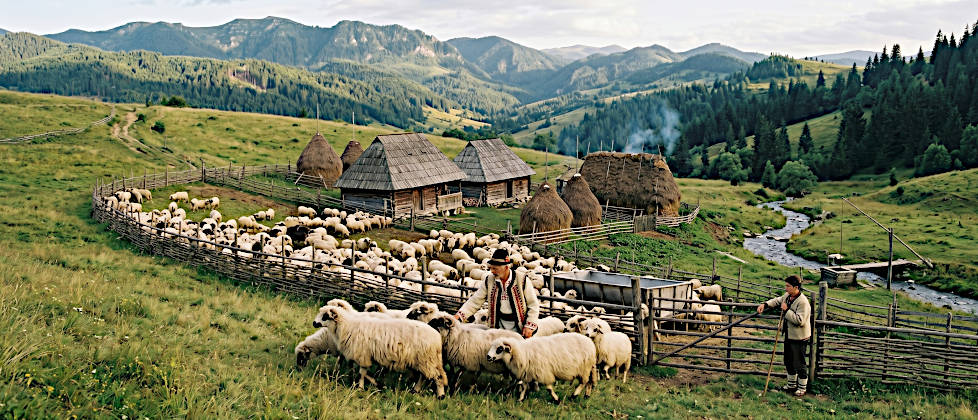
Eine weite Berglandschaft im Apuseni-Gebirge. Im Vordergrund treiben zwei Hirten in traditioneller Kleidung eine große Schafherde durch einen Holzpferch. Im Hintergrund stehen alte Holzhäuser mit steilen Strohdächern und Heuschober an einem kleinen Fluss.

West of the lively university city of Cluj-Napoca in Romania, a mountain world rises where the clocks noticeably tick slower. The Apuseni Mountains, also known as the Western Carpathians, harbor a cultural and landscape jewel: Țara Moților, the Land of the Moți. If you are looking for a destination off the beaten path that immerses you deeply in an archaic way of life, this region is one of the most pristine experiences you can still have in Europe.

Who are the Moți and what defines their culture?

The Moți are the inhabitants of the higher-altitude villages in the Apuseni Mountains, especially around the Arieș River valley. For centuries, their lives have been inextricably linked to the forest and wood as a material. This deep connection to nature shapes not only the architecture of the region but their entire daily life.

While many traditional crafts in Europe can only be found in museums, the wooden culture in Țara Moților is alive. The people here are masters of woodworking. From spruce trunks, they carve, turn, and build almost everything they need to live: from delicate wooden shingles to massive wooden barrels and agricultural tools, right up to their typical houses.

A special symbol of this culture is the Tulnic, a wind instrument up to three meters long made of spruce wood, similar to the Swiss alphorn. Originally, it was used by women to communicate across the wide valleys, warn of dangers, or call the flocks of sheep. With a little luck, you might hear the deep, melancholic tones of a tulnic echoing through the forests during your visit.

An archaic way of life amidst rugged nature

A trip to Țara Moților is like a journey to another era. The landscape is characterized by dense coniferous forests, deep karst caves, and wide, rolling alpine meadows where hay is still often mowed by hand and piled into characteristic hayricks. The villages are often widely scattered; some farmsteads can only be reached via unpaved dirt roads or steep paths.

Life here follows the rhythms of the seasons. In summer, the livestock moves to the high pastures, and the hay harvest dictates the daily routine. In the harsh, snowy winter, people huddle together in wood-heated parlors and dedicate themselves to crafts. It is a life of privation, but also one deeply connected to nature. If you embrace it and connect with the locals—even if communication often relies on hand gestures—you will experience incredible hospitality.

My tip: Photographing the Ploștini and the best time to travel

As a photographer, your heart will certainly beat faster in this region. A very special subject are the so-called Ploștini. These are old, traditional summer huts and stables that stand out due to their extremely steep, massive thatched roofs (sometimes also shingled roofs). You can still find them on the more remote plateaus, for example around the village of Gârda de Sus or in the hamlet of Casa de Piatră.

On photography: Forget the harsh midday light. When the sun is really low—whether in the morning or evening—the extreme textures of the old wood and thick thatched roofs truly pop. Definitely pack something wide-angle in your backpack. The landscape is vast, and you’ll often want a hut in the foreground and the wide valley behind it in the frame. As for the local people: keep your camera down at first. An honest hello, a smile, and a quick request, even if it takes hands and feet, work wonders before you press the shutter.

The best time to travel: When is the best time to go? For good pictures, May and June are particularly worthwhile when everything is really lush and green, or September and October. In autumn, you not only have colored foliage but often quite usable light throughout the day. In midsummer, the air frequently shimmers and it gets very hot, and in winter, you simply get stuck in deep snow on the remote dirt tracks.

Planning your trip: Points of contact and information sources

Since Țara Moților has not yet been swept up by mass tourism, a trip there requires a little preparation. Your journey ideally begins in Cluj-Napoca, which has an international airport. From there, you can reach the foothills of the Apuseni Mountains by rental car in about two to three hours.

Good starting points for exploration are the municipalities of Albac, Gârda de Sus, or Arieșeni. Here you will find authentic, often family-run guesthouses (pensiuni) where you can try the regional cuisine—this often includes homemade cheese, polenta (mămăligă), and a strong fruit brandy (pălincă).

Here are some useful links for your further research:

  • Apuseni Nature Park (Parcul Natural Apuseni): On the official website, you will find (mostly in Romanian and English) information about hiking trails, caves, and protected areas. www.parculapuseni.ro
  • Romanian Tourist Board: Offers good, general English overviews of the region and culture. romaniatourism.com

Let yourself be drawn into the Țara Moților adventure. It is a place that will ground you and show you how much strength and beauty lies in a traditional, simple way of life. Take your time, pack your camera, and discover this forgotten valley in the heart of Europe.
Travel Tip Transylvania: The Hidden Valley of Urwegen (Apold)

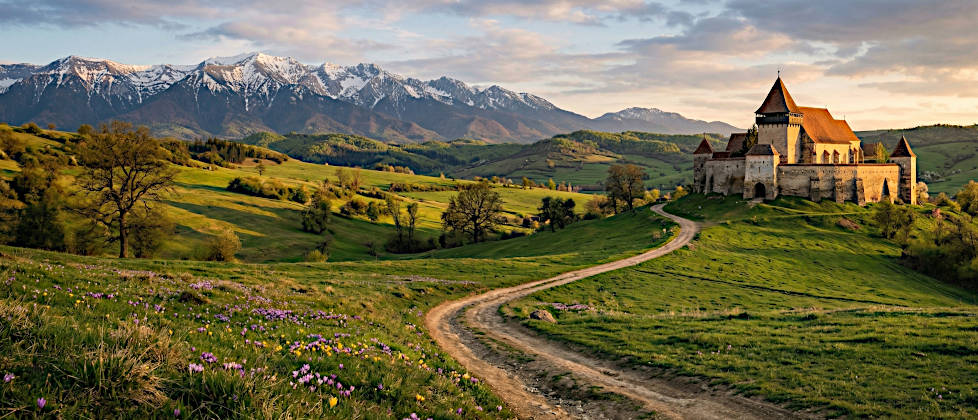
Außenansicht der mittelalterlichen Gräfenburg in Urwegen (Gârbova), Siebenbürgen, eingebettet in ein grünes Hügeltal während der Goldenen Stunde. Der massive Bergfried steht im Zentrum der Ringmauer.

Hermannstadt, or Sibiu as it is called in Romanian, is undoubtedly a cultural center and a magnet for visitors from all over Europe. The gently renovated alleys, the large squares, and the lively hustle and bustle invite You to linger. But those who seek the true, original Transylvania must leave the beaten tourist paths. Only a relatively short drive away from the pulsating city, a place hides in a gentle hilly landscape where time seems to have stood still: the valley of Urwegen, often also mentioned in the context of Apold.

This travel report takes You to a place of silence. A place that tells of a volatile past and, for me as a photographer, represents an inexhaustible source of inspiration.

History: A Fortress Through the Ages

The history of Urwegen is deeply rooted in the settlement of Transylvania by German-speaking immigrants, the Transylvanian Saxons. As in so many villages in the region, life here over the centuries was characterized by hard agricultural work and the constant threat of external enemies. To protect themselves from Ottoman and Tatar raids, the villagers began to fortify their church in the Middle Ages.

Urwegen holds an architectural and historical peculiarity: The complex is one of the last preserved Gräfenburgs (Count’s castles) in Transylvania. Originally built as the residence of the local nobles – the so-called Gräfen – it was only taken over and further expanded by the village community over time.

A fortified church was created. High ring walls, defense towers, and loopholes still bear witness to the unconditional will to defend the community. The church was not only the spiritual center but, in case of emergency, the last refuge for the entire village. For generations, the complex was maintained, expanded, and repaired until the massive geopolitical changes of the 20th century altered the face of the village forever.

The Current Situation of the Fortified Church: Silent Witnesses of the Past

With the mass exodus of the Transylvanian Saxons after the political changes of 1989/1990 in Romania, many villages were left almost deserted. In Urwegen, too, this turning point is clearly felt. The fortified church, once the pulsating center of a lively community, now stands mostly silent and imposing in the landscape.

The current situation is a mix of melancholic decay and hopeful preservation. While some parts of the ring wall cannot hide the traces of time and weather, there are always efforts by local initiatives, foundations, and former residents to secure the structure. The roof of the church was secured in the past to prevent water penetration. A walk through the courtyard of the fortress is like a journey into the past. You can literally feel the history in the old, hand-hewn stones and the massive oak wood of the battlements.

The Best Photo Spots In and Around Urwegen

As a photographer, I am always looking for motifs that speak their own language and convey emotions. Urwegen offers a fantastic backdrop for this. Here are my preferred photo spots:

  • The portal of the fortified church: The massive wooden doors, often decorated with iron fittings, offer a wonderful frame for detailed shots. The texture of the weathered wood in contrast to the stone archways is a classic but always rewarding motif.
  • The view from the hill: If You leave the village slightly towards the adjacent hills, a wonderful perspective opens up. Especially in the late afternoon light, the so-called golden hour, the sun bathes the valley and the striking roofs of the fortified church in a warm, soft light. The red tiles then stand out picturesquely from the lush green of the surroundings.
  • The interior of the church: Provided You gain access (see tips below), the interior offers a very special atmosphere. The sparse light falling through the narrow windows draws hard shadows on the old wooden benches and the altar. A tripod is essential here to capture the quiet, almost mystical mood without distracting image noise.
  • The alleys of the village: Even away from the fortress, an attentive look is worthwhile. The traditional Saxon farmhouses with their typical closed courtyards and colorful facades offer great architectural lines and an authentic picture of rural Romania.

Planning the Visit: Arrival and Key

Arrival from Hermannstadt (Sibiu): The drive with Your own vehicle or a rental car takes just over an hour, depending on the exact route and road conditions. Leave Sibiu in a westerly direction. The last few kilometers lead over easily navigable country roads that wind picturesquely through the hilly landscape. Use a navigation system so You don’t miss the exact turn-off into the valley.

The key to the fortified church: As with almost all remote fortified churches in Transylvania, the gate is not simply open. To visit the interior of the complex, You have to find the key keeper. Usually, there is a small note with a phone number (often in Romanian or German) hanging on the main gate. Alternatively, it is worth asking respectfully at the direct neighbors of the fortress, often in house number 1 or the parsonage opposite. The local people are usually very helpful. A small donation for the maintenance of the church following the visit is always highly appreciated and helps directly with the preservation of this cultural heritage.

Urwegen is not a place for fast tourism. It is a place for explorers, for people who can embrace the silence and seek beauty in the imperfect. Take Your time to explore the valley on foot, speak with the few people You meet, and let the special atmosphere of this hidden jewel work its magic on You.


Spring Awakening in Transylvania: A Road Trip Off the Beaten Path

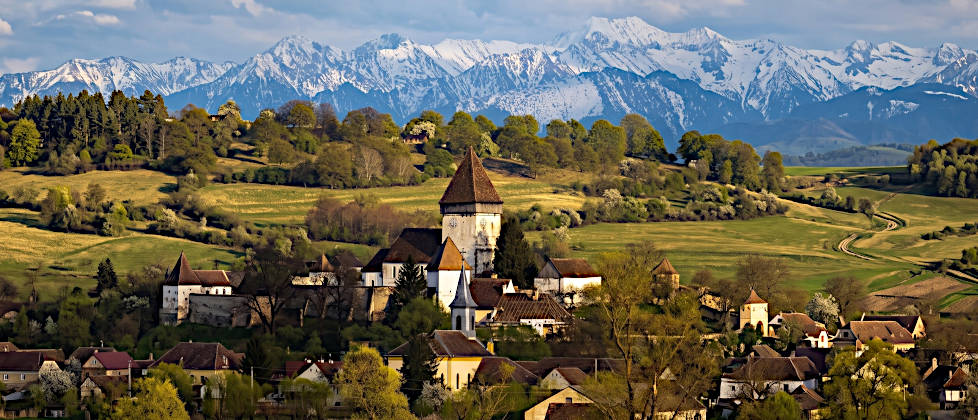
Ein Feldweg im Frühling vor einer historischen wehrhaften Kirchenburg in Siebenbürgen, im Hintergrund die schneebedeckten Karpaten.

When the last snowfields in the Romanian Carpathians melt at the end of March and the first wildflowers bathe the valleys in a delicate green, Transylvania reveals its most authentic side. Forget the overcrowded Bran Castle or the classic Dracula myths. Transylvania in spring is a place of longing for true explorers, individual tourists, and lovers of rugged nature and centuries-old culture.

Why Transylvania in Spring is Ideal for Individualists

The late March and early April sun wakes the sleepy villages from their winter slumber. The air is still crisp, but the roads are free from the summer tourist crowds. Now is your chance to immerse yourself in authentic rural life and experience the warm hospitality of the locals unfiltered.

Transylvania Insider Tips: Hidden Gems Off the Trail

1. The Fortified Churches of Mălâncrav and Cincșor

While Viscri is now well-known to many, you will still find absolute tranquility in villages like Mălâncrav (Malmkrog) or Cincșor (Kleinschenk). These fortified churches, built by the Transylvanian Saxons, sit majestically in the rolling hills. In spring, you can stroll for hours through the old apple orchards here without meeting a single soul.

2. The Apuseni Mountains (Western Carpathians)

For nature lovers, the Apuseni Nature Park is an absolute must. The karst mountain range is riddled with caves, gorges, and dense forests. A hike to the Cetățile Ponorului (Fortresses of Ponor) is particularly impressive right now, as the meltwater rivers give enormous power to the waterfalls and underground cave systems.

3. The Astra Open-Air Museum in Sibiu – Almost All to Yourself

Admittedly, Sibiu is no longer a secret. But the Astra Museum, located just outside the city and one of the largest open-air museums in Europe, truly unleashes its magic on a clear spring day. Strolling between the historic mills and crooked wooden houses on the lakeshore is wonderfully peaceful.

Culinary Discovery Tour: Hearty, Honest, Local

Romanian cuisine is just like the landscape: wild, hearty, and heartwarming. After a long spring hike, there is nothing better than stopping for a bite and tasting the real Transylvania:

  • Ciorbă de fasole cu afumătură: A rich bean soup with smoked meat, traditionally served in a hollowed-out loaf of bread. It is eaten with fresh red onions.
  • Sarmale: Cabbage rolls stuffed with minced meat and rice, often braised for hours in a clay pot. Accompanied by mămăligă (polenta) and a generous dollop of smântână (sour cream).
  • Papanași: The king of desserts! A fried dough pastry made with sweet cheese, covered in sour cream and homemade blueberry or sour cherry jam.

Practical Tips for Your Transylvania Road Trip

To explore these Transylvania insider tips on your own, a rental car is essential. The main roads are very well maintained, but to get to the truly untouched places, you will also have to drive on gravel roads. Use small guesthouses (pensiunea) instead of large hotels; here, your money flows directly into the local community, and you will get the best insider tips.


Are You Ready for Your Transylvania Adventure?

Pack your hiking boots, download offline maps, and embark on your Transylvanian adventure. Drum bun (Have a good trip)!

Now it’s your turn: Have you ever traveled to Romania or are you currently planning your first trip there? What is your personal insider tip for individual tourists? Be sure to let me know in the comments below – I look forward to hearing from you!