The Dry Stone Wall Made of Fieldstones

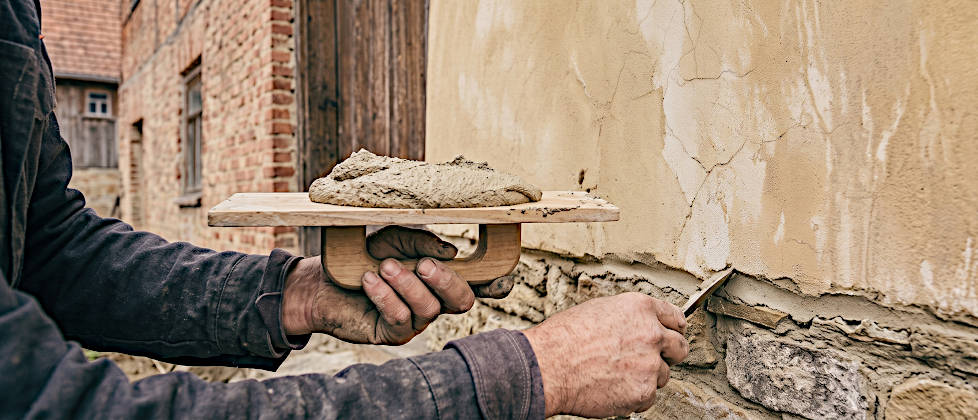
Aufbau einer Trockenmauer aus Feldsteinen an einem Hang: Die erste Steinreihe wird auf einem Sandbett mit einer gelben Wasserwaage und einer Richtschnur exakt ausgerichtet. Im Vordergrund liegen zwei Steinhammer im Sand.

The hilly landscapes of Transylvania are characterized by a rugged, natural beauty. If you own or manage a property in this region, you are often faced with the challenge of securing the soil from slipping on slopes. Concrete walls are functional, but rarely blend harmoniously into the rural, historical picture and also seal valuable surfaces. A traditional and ecologically much more sensible alternative is the dry stone wall made of fieldstones. Continue reading “The Dry Stone Wall Made of Fieldstones”

Destination Țara Moților: Discovering the Fascinating Wooden Culture in the Land of the Moți

Eine weite Berglandschaft im Apuseni-Gebirge. Im Vordergrund treiben zwei Hirten in traditioneller Kleidung eine große Schafherde durch einen Holzpferch. Im Hintergrund stehen alte Holzhäuser mit steilen Strohdächern und Heuschober an einem kleinen Fluss.

West of the lively university city of Cluj-Napoca in Romania, a mountain world rises where the clocks noticeably tick slower. The Apuseni Mountains, also known as the Western Carpathians, harbor a cultural and landscape jewel: Țara Moților, the Land of the Moți. If you are looking for a destination off the beaten path that immerses you deeply in an archaic way of life, this region is one of the most pristine experiences you can still have in Europe.

Who are the Moți and what defines their culture?

The Moți are the inhabitants of the higher-altitude villages in the Apuseni Mountains, especially around the Arieș River valley. For centuries, their lives have been inextricably linked to the forest and wood as a material. This deep connection to nature shapes not only the architecture of the region but their entire daily life.

While many traditional crafts in Europe can only be found in museums, the wooden culture in Țara Moților is alive. The people here are masters of woodworking. From spruce trunks, they carve, turn, and build almost everything they need to live: from delicate wooden shingles to massive wooden barrels and agricultural tools, right up to their typical houses.

A special symbol of this culture is the Tulnic, a wind instrument up to three meters long made of spruce wood, similar to the Swiss alphorn. Originally, it was used by women to communicate across the wide valleys, warn of dangers, or call the flocks of sheep. With a little luck, you might hear the deep, melancholic tones of a tulnic echoing through the forests during your visit.

An archaic way of life amidst rugged nature

A trip to Țara Moților is like a journey to another era. The landscape is characterized by dense coniferous forests, deep karst caves, and wide, rolling alpine meadows where hay is still often mowed by hand and piled into characteristic hayricks. The villages are often widely scattered; some farmsteads can only be reached via unpaved dirt roads or steep paths.

Life here follows the rhythms of the seasons. In summer, the livestock moves to the high pastures, and the hay harvest dictates the daily routine. In the harsh, snowy winter, people huddle together in wood-heated parlors and dedicate themselves to crafts. It is a life of privation, but also one deeply connected to nature. If you embrace it and connect with the locals—even if communication often relies on hand gestures—you will experience incredible hospitality.

My tip: Photographing the Ploștini and the best time to travel

As a photographer, your heart will certainly beat faster in this region. A very special subject are the so-called Ploștini. These are old, traditional summer huts and stables that stand out due to their extremely steep, massive thatched roofs (sometimes also shingled roofs). You can still find them on the more remote plateaus, for example around the village of Gârda de Sus or in the hamlet of Casa de Piatră.

On photography: Forget the harsh midday light. When the sun is really low—whether in the morning or evening—the extreme textures of the old wood and thick thatched roofs truly pop. Definitely pack something wide-angle in your backpack. The landscape is vast, and you’ll often want a hut in the foreground and the wide valley behind it in the frame. As for the local people: keep your camera down at first. An honest hello, a smile, and a quick request, even if it takes hands and feet, work wonders before you press the shutter.

The best time to travel: When is the best time to go? For good pictures, May and June are particularly worthwhile when everything is really lush and green, or September and October. In autumn, you not only have colored foliage but often quite usable light throughout the day. In midsummer, the air frequently shimmers and it gets very hot, and in winter, you simply get stuck in deep snow on the remote dirt tracks.

Planning your trip: Points of contact and information sources

Since Țara Moților has not yet been swept up by mass tourism, a trip there requires a little preparation. Your journey ideally begins in Cluj-Napoca, which has an international airport. From there, you can reach the foothills of the Apuseni Mountains by rental car in about two to three hours.

Good starting points for exploration are the municipalities of Albac, Gârda de Sus, or Arieșeni. Here you will find authentic, often family-run guesthouses (pensiuni) where you can try the regional cuisine—this often includes homemade cheese, polenta (mămăligă), and a strong fruit brandy (pălincă).

Here are some useful links for your further research:

  • Apuseni Nature Park (Parcul Natural Apuseni): On the official website, you will find (mostly in Romanian and English) information about hiking trails, caves, and protected areas. www.parculapuseni.ro
  • Romanian Tourist Board: Offers good, general English overviews of the region and culture. romaniatourism.com

Let yourself be drawn into the Țara Moților adventure. It is a place that will ground you and show you how much strength and beauty lies in a traditional, simple way of life. Take your time, pack your camera, and discover this forgotten valley in the heart of Europe.

Sandblasting or Sanding Old Wooden Beams?

Aufnahme eines handgehauenen Eichenbalkens mit deutlichem Vorher-Nachher-Kontrast nach der Reinigung.

When exposing old, hand-hewn oak beams in your home, you often face a major challenge: the beams have darkened significantly over the decades or centuries, they have often been painted – at best with easily removable limewash, at worst with stubborn oil paint – or they are simply extremely dusty. To fully bring out the rustic character of the hand-hewn beams indoors, they must be cleaned.

But which method is the right one for hand-hewn oak beams? In this article, I compare the most common approaches: low-pressure sandblasting, dry ice blasting, and mechanical sanding using a brush sander or a wire brush attachment for a drill or angle grinder.

Preparation: Safety and Preliminary Work

Before you choose a method, there are steps and safety precautions that are absolutely essential. Old beams are often full of surprises and carry hidden risks.

Important Health Warning: Oak Wood Dust

Oak wood is beautiful, but its sanding dust is extremely dangerous and is considered carcinogenic. When sanding or blasting oak beams indoors, professional respiratory protection (at least an FFP3 mask) is absolutely mandatory. You must ensure powerful dust extraction (dust class M or H) and completely seal off adjacent living spaces to avoid endangering your health and that of your family.

My practical tip: Meticulously examine the wood for old, hand-forged nails, screws, or staples. A metal detector, more precisely a so-called pinpointer, does a great job here. Personally, I use the Garrett Pro-Pointer 2 for this task. Thanks to its handy shape, you can scan the beams centimeter by centimeter and accurately locate even deeply embedded metal parts that are often invisible from the outside.

Since it is extremely time-consuming to put down the tool after every find to pull the nail, I work in stages: Find the metal piece, make it visible, and simply mark the spot with a dot of spray paint. This way, you can complete the entire search first. In the second step, you take the tool and remove or countersink all marked nails in one go. In the third step, do a quick final check with the pinpointer. The sprayed paint will simply be removed during the subsequent cleaning (sanding or blasting) anyway. Take this preparation seriously: an overlooked nail can not only ruin your brush sander immediately, but it can also cause dangerous sparks or unsightly rust marks during blasting.

The Comparison: Blasting, Brush Sander, and Wire Brush

Hand-hewn wood is characterized by its uneven, wavy surface – the so-called axe marks. This is exactly the structure you want to preserve.

Method 1: The Brush Sander (Burnishing Machine)

A brush sander with a nylon or brass brush is an excellent choice for DIY enthusiasts. The rotating brush adapts well to the unevenness of the hand-hewn wood without changing its basic shape. This gives you very good control over the material removal.

Method 2: The Wire Brush (for Drill or Angle Grinder)

A very popular and inexpensive variant is the use of wire brush attachments (cup or wheel brushes) for the drill or angle grinder. This method is significantly more abrasive than the standard brush sander. This is particularly advantageous if you need to remove stubborn oil paint. In addition, narrow wire brushes are excellent for reaching into large cracks and deep joints in the wood. But beware: the rotating wire bristles can be extremely aggressive and leave deep grooves in the wood if too much pressure is applied.

Method 3: Low-Pressure Blasting

In low-pressure blasting, a fine abrasive (such as glass beads, walnut shells, or special sand) is blown onto the wood with relatively low pressure. This method cleans deep into the tightest crevices and wormholes that you would never reach with a brush. The result is often very uniform.

Method 4: Dry Ice Blasting

A particularly gentle premium alternative is dry ice blasting. Here, frozen CO2 pellets are shot at the wood, blasting away dirt or stubborn oil paint upon impact, and then immediately dissolving into gas. No abrasive is left behind, only the removed dirt. This method is extremely gentle on the historical wood structure, but usually more expensive as it is almost always carried out by professionals.

Cost-Benefit Comparison & Important Warning Regarding Patina

Mechanical Sanding (Brush Sander & Wire Brush): Lower initial costs (approx. 100 to 300 euros, wire brush attachments are even cheaper), ideal for smaller areas and individual rooms. Good for limewash, but soft brushes smear quickly with tough oil paint, which is where the wire brush shows its strengths. However, the time required is enormous, and the work is very physically demanding.

Low-Pressure & Dry Ice Blasting: High costs for renting a compressor and blasting equipment or hiring a specialist company. However, these methods save an extreme amount of time for large areas and thick layers of paint.

Warning: Proceed carefully with all methods! Too aggressive removal (especially with coarse wire brushes) destroys the historical patina and the unique axe marks of the oak beams. Once sanded away, this historical character is irretrievably lost.

Step-by-Step to the Perfect Beam Look

To ensure your project is a success, you should proceed systematically:

  1. Remove nails from the beams: Pull all metal parts with pincers or a crowbar. If they are stuck too tightly, drive them deep into the wood with a punch.
  2. Choose a method: Weigh up whether to use a brush sander, a wire brush, or a blasting method based on the room size, your budget, and the coating (limewash vs. oil paint).
  3. Install dust extraction and protection: All methods generate immense amounts of dust. When sanding, a strong industrial vacuum cleaner connected directly to the machine is mandatory. When blasting, you must completely cover the room with plastic sheeting and create negative pressure. Due to the carcinogenic oak wood dust, wearing an FFP3 respirator mask is absolutely essential!
  4. Surface treatment with boiled linseed oil: Once the wood is cleaned and free of dust, the finish is applied. Paint the oak beams with high-quality boiled linseed oil (Leinöl-Firnis). The oil enhances the grain, protects the wood, and gives it a warm tone. Especially as a photographer, I appreciate how the linseed oil makes the natural contrasts of the wood shine – this later creates wonderful, three-dimensional motifs in the room.

Further Information Sources

If you want to read more deeply into the subject, here are some valuable resources:

  • Safe handling of wood dust: The information from the BG Bau (German construction industry employers’ liability insurance association) will help you protect your health while sanding.
  • Expert knowledge on woodworking: On platforms like Holzwerken.net, you will find many tips on dealing with historical woods and natural surface treatments.

Take your time with this project. The effort is worth it when the old oak beams finally shape your living space as an impressive testament to the past.

Reactivating the Traditional Summer Kitchen: From Ruin to Culinary Centerpiece

Freigelegte Grundmauer und Ruine meiner alten Sommerküche aus Stein und Ziegeln neben meinem Bauernhaus in Siebenbürgen, bereit für die Renovierung.

The thought of standing in a cool, shady outdoor kitchen on a hot July day, while the scent of fresh herbs and roasted food wafts through the garden, is deeply soothing. In the past, the summer kitchen was standard in the countryside – it kept the heat of the stove away from the main house and was the center for preserving the harvest. Today, this place is experiencing a renaissance.

In this post, I will show you how to renovate an old summer kitchen, what practical benefits it offers you today, and what you should consider during the planning phase.

A Look at Transylvania: From Wooden House to Stone Courtyard

To truly understand the origin and necessity of the summer kitchen, it is worth taking a look at the historical construction methods, for example in Transylvania. In the past, pure wooden houses dominated the villages there. Wood was abundantly available in the adjacent Carpathian Mountains and was the logical building material of choice.

However, due to intensive mining, agricultural clearing, and the generally high demand for wood, the forests shrank visibly. In the 18th century, the rulers of the Habsburg Empire – especially Maria Theresa – intervened rigorously. In order to conserve the valuable wood resources and above all to contain the devastating village fires that regularly destroyed wooden houses, the construction of stone houses was heavily promoted and partly made compulsory.

In the course of this, the architecture of the farmsteads changed massively. To minimize the risk of fire and the enormous heat development in the new, massive main house, fire-intensive activities were relocated. Baking, laundry care, and, of course, cooking in the hot months now took place in a separate building. The summer kitchen became a fixed, indispensable component, not only of the Transylvanian Saxon farmstead.

Why Reactivation is Worth It for You

Before you reach for the hammer, it is good to visualize the added value today. A summer kitchen is much more than just a covered barbecue area.

  • Thermal relief: Your residential house stays significantly cooler in the summer, as the oven and stove are operated outside.
  • Odor control: Strong odors from roasting, deep-frying, or preserving dissipate immediately in the fresh air and do not settle in your living spaces.
  • Social center: Cooking transforms from an isolated process in the house kitchen into a communal experience outdoors.
  • Harvest processing: If you grow your own fruit or vegetables, you can wash, clean, and preserve them directly in the garden without carrying the dirt into the house.
My tip: Check the existing connections in your outbuilding beforehand. Often, under old floors or in the walls, there are still water pipes or power connections that can be reactivated by a professional with manageable effort. This saves you high development costs for your project.

Step by Step: Renovating Old Substance

Many old summer kitchens are located in former washhouses or sheds. The building fabric is usually solid but requires attention after years of vacancy.

1. Inventory and Drainage

Often, rising damp is the biggest problem. Check the roof and the floor slab. If you are renewing the floor, ensure a slight slope towards the door – this way, you can easily hose down and clean the room later.

2. The Choice of Surfaces

In a summer kitchen, which is usually not heated in winter, there is fluctuating humidity.

  • Walls: Pure lime plaster or silicate paints are ideal, as they are breathable, regulate moisture, and naturally prevent mold growth.
  • Worktops: Natural stone, polished concrete, or hard-wearing tiles are robust, weatherproof, and easy to clean.

3. Stove and Oven: The Heart

An old, wood-fired kitchen stove exudes pure nostalgia, but is often impractical for a quick coffee. A clever combination of a modern induction hob (for everyday use) and a restored wood-fired oven or barbecue fireplace offers you maximum flexibility.

Equipment and Functionality

To make working in your new old summer kitchen a joy, the ergonomics must be right. Think about short distances between the sink, workspace, and cooking area.

  • Lighting plan: Since you will often sit outside and cook late into mild summer evenings, good, glare-free lighting of the workspaces is essential. Indirect, warm white light also creates the necessary atmosphere when the food is on the table.
  • Storage space: Use open shelving systems made of metal or oiled wood. Closed cupboards in unheated, damp rooms tend to develop musty odors over the winter months.

Further Information and Sources

If you want to delve deeper into the matter, these contact points will help you with your planning:

  • The Renovation Bible: An absolute must for your project is the book „Das sächsische Bauernhaus in Siebenbürgen. Was wie machen an alten Häusern“ by Jan Hülsemann. It is rightfully considered the bible for renovators of Transylvanian farmsteads and provides you with invaluable, practical tips on preserving the historical substance.
  • Building culture and history: You can find more about the historical development of farms and construction methods in Transylvania at the Fortified Churches Foundation (Stiftung Kirchenburgen), which deals intensively with the architectural heritage of the region.
  • Traditional crafts and building materials: A local network is crucial for an authentic renovation in Transylvania. The Mihai Eminescu Trust is strongly committed to preserving the village building culture and often provides contacts to traditional craftsmen (such as clay builders) or sources for historical materials (e.g., hand-molded bricks). Another way is to ask directly in neighboring villages for unused demolition material.
  • Local building law (Romania): The first step for a building permit (Autorizație de construire) leads to the local town hall (Primărie). If your farm is located in a protected zone, the County Directorate for Culture (Direcția Județeană pentru Cultură) must be involved. To reactivate old chimneys, you should also consult a local chimney sweep (Coșar) to meet the current fire protection regulations of the fire brigade (ISU).

Travel Tip Transylvania: The Hidden Valley of Urwegen (Apold)

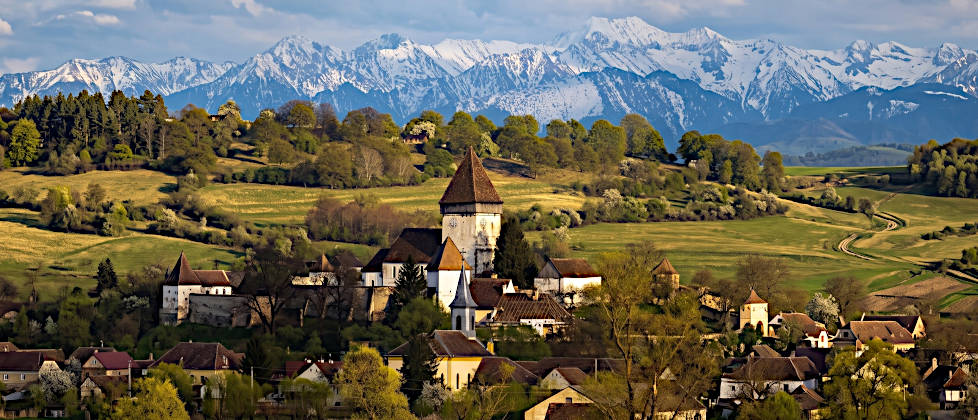
Außenansicht der mittelalterlichen Gräfenburg in Urwegen (Gârbova), Siebenbürgen, eingebettet in ein grünes Hügeltal während der Goldenen Stunde. Der massive Bergfried steht im Zentrum der Ringmauer.

Hermannstadt, or Sibiu as it is called in Romanian, is undoubtedly a cultural center and a magnet for visitors from all over Europe. The gently renovated alleys, the large squares, and the lively hustle and bustle invite You to linger. But those who seek the true, original Transylvania must leave the beaten tourist paths. Only a relatively short drive away from the pulsating city, a place hides in a gentle hilly landscape where time seems to have stood still: the valley of Urwegen, often also mentioned in the context of Apold.

This travel report takes You to a place of silence. A place that tells of a volatile past and, for me as a photographer, represents an inexhaustible source of inspiration.

History: A Fortress Through the Ages

The history of Urwegen is deeply rooted in the settlement of Transylvania by German-speaking immigrants, the Transylvanian Saxons. As in so many villages in the region, life here over the centuries was characterized by hard agricultural work and the constant threat of external enemies. To protect themselves from Ottoman and Tatar raids, the villagers began to fortify their church in the Middle Ages.

Urwegen holds an architectural and historical peculiarity: The complex is one of the last preserved Gräfenburgs (Count’s castles) in Transylvania. Originally built as the residence of the local nobles – the so-called Gräfen – it was only taken over and further expanded by the village community over time.

A fortified church was created. High ring walls, defense towers, and loopholes still bear witness to the unconditional will to defend the community. The church was not only the spiritual center but, in case of emergency, the last refuge for the entire village. For generations, the complex was maintained, expanded, and repaired until the massive geopolitical changes of the 20th century altered the face of the village forever.

The Current Situation of the Fortified Church: Silent Witnesses of the Past

With the mass exodus of the Transylvanian Saxons after the political changes of 1989/1990 in Romania, many villages were left almost deserted. In Urwegen, too, this turning point is clearly felt. The fortified church, once the pulsating center of a lively community, now stands mostly silent and imposing in the landscape.

The current situation is a mix of melancholic decay and hopeful preservation. While some parts of the ring wall cannot hide the traces of time and weather, there are always efforts by local initiatives, foundations, and former residents to secure the structure. The roof of the church was secured in the past to prevent water penetration. A walk through the courtyard of the fortress is like a journey into the past. You can literally feel the history in the old, hand-hewn stones and the massive oak wood of the battlements.

The Best Photo Spots In and Around Urwegen

As a photographer, I am always looking for motifs that speak their own language and convey emotions. Urwegen offers a fantastic backdrop for this. Here are my preferred photo spots:

  • The portal of the fortified church: The massive wooden doors, often decorated with iron fittings, offer a wonderful frame for detailed shots. The texture of the weathered wood in contrast to the stone archways is a classic but always rewarding motif.
  • The view from the hill: If You leave the village slightly towards the adjacent hills, a wonderful perspective opens up. Especially in the late afternoon light, the so-called golden hour, the sun bathes the valley and the striking roofs of the fortified church in a warm, soft light. The red tiles then stand out picturesquely from the lush green of the surroundings.
  • The interior of the church: Provided You gain access (see tips below), the interior offers a very special atmosphere. The sparse light falling through the narrow windows draws hard shadows on the old wooden benches and the altar. A tripod is essential here to capture the quiet, almost mystical mood without distracting image noise.
  • The alleys of the village: Even away from the fortress, an attentive look is worthwhile. The traditional Saxon farmhouses with their typical closed courtyards and colorful facades offer great architectural lines and an authentic picture of rural Romania.

Planning the Visit: Arrival and Key

Arrival from Hermannstadt (Sibiu): The drive with Your own vehicle or a rental car takes just over an hour, depending on the exact route and road conditions. Leave Sibiu in a westerly direction. The last few kilometers lead over easily navigable country roads that wind picturesquely through the hilly landscape. Use a navigation system so You don’t miss the exact turn-off into the valley.

The key to the fortified church: As with almost all remote fortified churches in Transylvania, the gate is not simply open. To visit the interior of the complex, You have to find the key keeper. Usually, there is a small note with a phone number (often in Romanian or German) hanging on the main gate. Alternatively, it is worth asking respectfully at the direct neighbors of the fortress, often in house number 1 or the parsonage opposite. The local people are usually very helpful. A small donation for the maintenance of the church following the visit is always highly appreciated and helps directly with the preservation of this cultural heritage.

Urwegen is not a place for fast tourism. It is a place for explorers, for people who can embrace the silence and seek beauty in the imperfect. Take Your time to explore the valley on foot, speak with the few people You meet, and let the special atmosphere of this hidden jewel work its magic on You.


Lime mortar for historic buildings: walls, plaster and tadelakt in damp areas

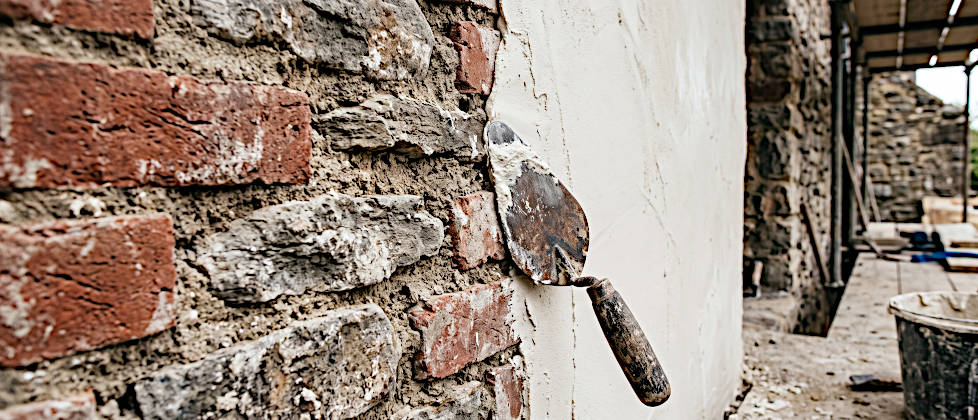
Nahaufnahme einer historischen Naturstein- und Ziegelwand in Siebenbürgen, an der frischer, heller Kalkmörtel für historisches Mauerwerk mit einer Kelle aufgetragen wird. Warmes Nachmittagslicht hebt die poröse Textur hervor.

Renovating a 150-year-old building comes with many challenges. One of the most severe mistakes made with old buildings is the use of modern building materials like cement or synthetic resin-based plasters. These materials seal the historical masonry, trap moisture, and inevitably lead to massive structural damage.

The only professional solution for preserving old building fabric is a return to a traditional binder: lime. In this post, I will show in detail how lime mortar is used for masonry and plastering, and which special techniques are necessary for damp areas such as plinths, garden walls, and even the bathroom (Tadelakt).

Why cement destroys historical buildings: Old bricks and natural stones are soft and capillary-active. Cement mortar is much harder than the stone itself and extremely rigid. During natural settling of the house, the cement does not crack; instead, the historical stone breaks. Furthermore, cement prevents rising dampness from evaporating. The water rises higher and higher into the wall, destroying it from the inside. Lime, on the other hand, is elastic, breathable (vapor-permeable), and acts as a moisture regulator.

1. Lime Mortar for Masonry: Flexibility for Old Stone

When repairing load-bearing walls or laying new historical stones, a pure lime mortar is essential. It adapts to the thermal and static movements of the old house.

  • The mixing ratio: For a classic masonry mortar, mix 1 part lime putty (slaked for at least 12 months) with 3 parts sharp sand (grain size 0-4 mm).
  • Application: Historical bricks and natural stones absorb water extremely quickly. If they are laid dry, they extract the water from the mortar before it can set (it “burns”). Extensive pre-wetting of the stones is therefore absolutely mandatory.
  • The setting process: Pure non-hydraulic lime does not harden by drying out, but by absorbing carbon dioxide (CO2) from the air (carbonation). This process is slow and requires a certain basic moisture.

2. Lime Mortar for Plastering: The Breathing Skin of the Wall

A pure lime plaster is the best insurance against mold. Due to its naturally high pH value (alkaline), it deprives mold spores of any basis for life. Additionally, it absorbs moisture when humidity is high and releases it when the air is dry.

  • Base coat (leveling plaster): Here, coarse sand (0-4 mm) is mixed with lime in a 1:3 ratio. The plaster is thrown onto the wall, not spread, to achieve optimal mechanical interlocking with the deeply raked joints.
  • Top coat (finishing plaster): Fine sand (0-1 mm or 0-2 mm) is used for the visible layer. I pay special attention to the texture here: a slightly uneven lime plaster, rubbed with a sponge float, casts a wonderfully soft light that gives old rooms their true character.

3. Lime Mortar in Damp Areas: Plinths and Garden Walls

Here we reach the limits of normal non-hydraulic lime. Areas permanently exposed to heavy moisture or even splashing water (foundations, the exterior plinth of the house, or freestanding garden walls) require a different approach. Non-hydraulic lime does not set under wet conditions and would be washed away.

The solution is hydraulic lime.

Using Natural Hydraulic Lime (NHL)

NHL (Natural Hydraulic Lime) is burnt from special limestones that naturally contain clay minerals. These clay components ensure that the lime hardens not only through CO2 from the air but also through a chemical reaction with water. It becomes stronger than non-hydraulic lime and is frost- and water-resistant, yet remains breathable and softer than cement.

The Plinth Plaster as a Sacrificial Plaster

In the plinth area, the masonry often draws salt-laden moisture from the ground. Here, a special plinth plaster made of NHL (usually NHL 3.5 or NHL 5) and coarse, open-pored sand is applied. This plaster acts as a “sacrificial plaster”. It allows the water to evaporate while the harmful salts crystallize on the plaster surface. After 10 to 15 years, this plaster becomes saturated, crumbles off, and is renewed. The historical masonry behind it, however, remains intact.

Pozzolans: The Roman Technique for the Garden Wall

If no NHL is available, normal lime putty can be made hydraulic by adding pozzolans (e.g., brick dust from crushed old roof tiles or volcanic trass). The Romans already used this technique for their aqueducts. The brick dust reacts with the lime and makes it waterproof – ideal for the tops of garden walls that are exposed to rain without protection.

4. Tadelakt: Waterproof Lime for Bathroom and Kitchen

The antique Moroccan plastering technique Tadelakt proves that lime can also be highly water-repellent. It is the perfect, seamless alternative to modern tiles in a historical farmhouse.

Tadelakt uses a special, strongly hydraulic shell lime. It is applied in several thin layers. The crucial step is compaction: before the plaster fully hardens, the surface is polished with a smooth semi-precious stone (e.g., agate) under strong pressure in small, circular movements. Finally, pure olive oil soap is applied. The fatty acids of the soap react with the highly alkaline lime to form water-insoluble lime soap.

The result is a fascinating, slightly wavy surface that is waterproof but remains breathable. It is perfectly suited for shower walls or as a splashback in a country kitchen. Visually, Tadelakt offers a depth and liveliness that industrially manufactured tiles can never achieve.


Step-by-Step: Mixing Plinth Plaster for Damp Masonry

Since the plinth area is the most common problem zone in old houses, here is the exact procedure for a breathable renovation plaster based on hydraulic lime.

  1. Preparation and raking joints: Completely remove all old cement plaster from the plinth. Rake out the joints of the historical masonry to a depth of at least 2 to 3 centimeters. Brush the entire surface dry.
  2. Intensive pre-wetting: Wet the masonry intensively with a masonry brush or a fine spray. Ideally, start this the evening before. The stone must be damp, but matte on the surface (not wet and shiny).
  3. Mixing the mortar: Mix the natural hydraulic lime (NHL) with the sand in a ratio of 1:2.5 to 1:3. Add only enough water to create a plastic, well-adhering mass. The mortar must not be too liquid.
  4. Throwing on the plaster: Throw the plaster vigorously onto the wall with the trowel, using a flick of the wrist. This throwing action is absolutely necessary to press the mortar deep into the raked joints. Afterward, only roughly level the plaster and leave the surface rough so it can absorb and release plenty of moisture.
  5. Aftercare: Protect the fresh plinth plaster from direct sunlight and strong wind. Keep it slightly damp for the next 2 to 3 days (mist it regularly) so the hydraulic lime can set optimally.