Travel Tip Transylvania: The Hidden Valley of Urwegen (Apold)

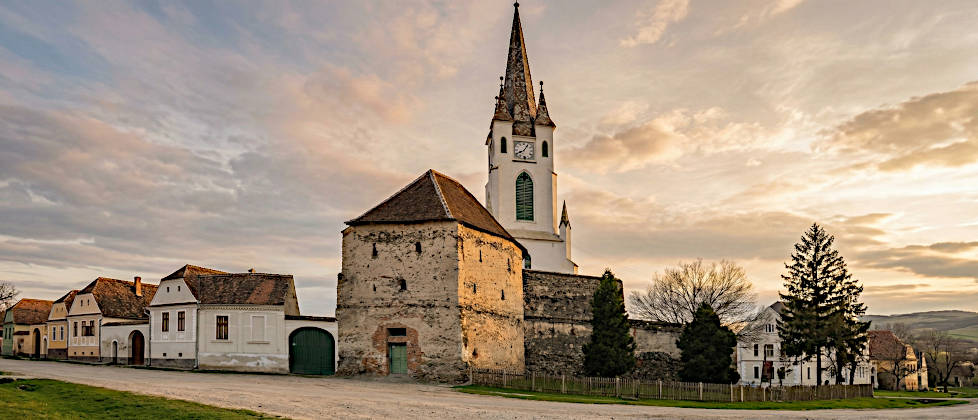
Außenansicht der mittelalterlichen Gräfenburg in Urwegen (Gârbova), Siebenbürgen, eingebettet in ein grünes Hügeltal während der Goldenen Stunde. Der massive Bergfried steht im Zentrum der Ringmauer.

Hermannstadt, or Sibiu as it is called in Romanian, is undoubtedly a cultural center and a magnet for visitors from all over Europe. The gently renovated alleys, the large squares, and the lively hustle and bustle invite You to linger. But those who seek the true, original Transylvania must leave the beaten tourist paths. Only a relatively short drive away from the pulsating city, a place hides in a gentle hilly landscape where time seems to have stood still: the valley of Urwegen, often also mentioned in the context of Apold.

This travel report takes You to a place of silence. A place that tells of a volatile past and, for me as a photographer, represents an inexhaustible source of inspiration.

History: A Fortress Through the Ages

The history of Urwegen is deeply rooted in the settlement of Transylvania by German-speaking immigrants, the Transylvanian Saxons. As in so many villages in the region, life here over the centuries was characterized by hard agricultural work and the constant threat of external enemies. To protect themselves from Ottoman and Tatar raids, the villagers began to fortify their church in the Middle Ages.

Urwegen holds an architectural and historical peculiarity: The complex is one of the last preserved Gräfenburgs (Count’s castles) in Transylvania. Originally built as the residence of the local nobles – the so-called Gräfen – it was only taken over and further expanded by the village community over time.

A fortified church was created. High ring walls, defense towers, and loopholes still bear witness to the unconditional will to defend the community. The church was not only the spiritual center but, in case of emergency, the last refuge for the entire village. For generations, the complex was maintained, expanded, and repaired until the massive geopolitical changes of the 20th century altered the face of the village forever.

The Current Situation of the Fortified Church: Silent Witnesses of the Past

With the mass exodus of the Transylvanian Saxons after the political changes of 1989/1990 in Romania, many villages were left almost deserted. In Urwegen, too, this turning point is clearly felt. The fortified church, once the pulsating center of a lively community, now stands mostly silent and imposing in the landscape.

The current situation is a mix of melancholic decay and hopeful preservation. While some parts of the ring wall cannot hide the traces of time and weather, there are always efforts by local initiatives, foundations, and former residents to secure the structure. The roof of the church was secured in the past to prevent water penetration. A walk through the courtyard of the fortress is like a journey into the past. You can literally feel the history in the old, hand-hewn stones and the massive oak wood of the battlements.

The Best Photo Spots In and Around Urwegen

As a photographer, I am always looking for motifs that speak their own language and convey emotions. Urwegen offers a fantastic backdrop for this. Here are my preferred photo spots:

  • The portal of the fortified church: The massive wooden doors, often decorated with iron fittings, offer a wonderful frame for detailed shots. The texture of the weathered wood in contrast to the stone archways is a classic but always rewarding motif.
  • The view from the hill: If You leave the village slightly towards the adjacent hills, a wonderful perspective opens up. Especially in the late afternoon light, the so-called golden hour, the sun bathes the valley and the striking roofs of the fortified church in a warm, soft light. The red tiles then stand out picturesquely from the lush green of the surroundings.
  • The interior of the church: Provided You gain access (see tips below), the interior offers a very special atmosphere. The sparse light falling through the narrow windows draws hard shadows on the old wooden benches and the altar. A tripod is essential here to capture the quiet, almost mystical mood without distracting image noise.
  • The alleys of the village: Even away from the fortress, an attentive look is worthwhile. The traditional Saxon farmhouses with their typical closed courtyards and colorful facades offer great architectural lines and an authentic picture of rural Romania.

Planning the Visit: Arrival and Key

Arrival from Hermannstadt (Sibiu): The drive with Your own vehicle or a rental car takes just over an hour, depending on the exact route and road conditions. Leave Sibiu in a westerly direction. The last few kilometers lead over easily navigable country roads that wind picturesquely through the hilly landscape. Use a navigation system so You don’t miss the exact turn-off into the valley.

The key to the fortified church: As with almost all remote fortified churches in Transylvania, the gate is not simply open. To visit the interior of the complex, You have to find the key keeper. Usually, there is a small note with a phone number (often in Romanian or German) hanging on the main gate. Alternatively, it is worth asking respectfully at the direct neighbors of the fortress, often in house number 1 or the parsonage opposite. The local people are usually very helpful. A small donation for the maintenance of the church following the visit is always highly appreciated and helps directly with the preservation of this cultural heritage.

Urwegen is not a place for fast tourism. It is a place for explorers, for people who can embrace the silence and seek beauty in the imperfect. Take Your time to explore the valley on foot, speak with the few people You meet, and let the special atmosphere of this hidden jewel work its magic on You.


Lime mortar for historic buildings: walls, plaster and tadelakt in damp areas

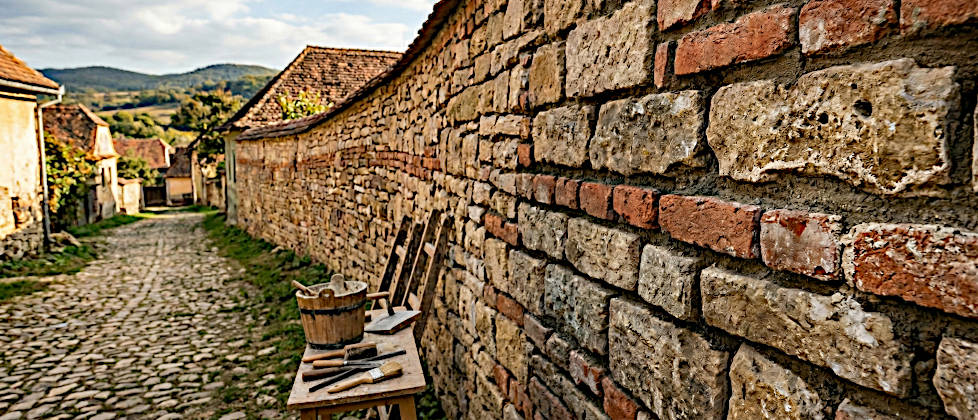
Nahaufnahme einer historischen Naturstein- und Ziegelwand in Siebenbürgen, an der frischer, heller Kalkmörtel für historisches Mauerwerk mit einer Kelle aufgetragen wird. Warmes Nachmittagslicht hebt die poröse Textur hervor.

Renovating a 150-year-old building comes with many challenges. One of the most severe mistakes made with old buildings is the use of modern building materials like cement or synthetic resin-based plasters. These materials seal the historical masonry, trap moisture, and inevitably lead to massive structural damage.

The only professional solution for preserving old building fabric is a return to a traditional binder: lime. In this post, I will show in detail how lime mortar is used for masonry and plastering, and which special techniques are necessary for damp areas such as plinths, garden walls, and even the bathroom (Tadelakt).

Why cement destroys historical buildings: Old bricks and natural stones are soft and capillary-active. Cement mortar is much harder than the stone itself and extremely rigid. During natural settling of the house, the cement does not crack; instead, the historical stone breaks. Furthermore, cement prevents rising dampness from evaporating. The water rises higher and higher into the wall, destroying it from the inside. Lime, on the other hand, is elastic, breathable (vapor-permeable), and acts as a moisture regulator.

1. Lime Mortar for Masonry: Flexibility for Old Stone

When repairing load-bearing walls or laying new historical stones, a pure lime mortar is essential. It adapts to the thermal and static movements of the old house.

  • The mixing ratio: For a classic masonry mortar, mix 1 part lime putty (slaked for at least 12 months) with 3 parts sharp sand (grain size 0-4 mm).
  • Application: Historical bricks and natural stones absorb water extremely quickly. If they are laid dry, they extract the water from the mortar before it can set (it “burns”). Extensive pre-wetting of the stones is therefore absolutely mandatory.
  • The setting process: Pure non-hydraulic lime does not harden by drying out, but by absorbing carbon dioxide (CO2) from the air (carbonation). This process is slow and requires a certain basic moisture.

2. Lime Mortar for Plastering: The Breathing Skin of the Wall

A pure lime plaster is the best insurance against mold. Due to its naturally high pH value (alkaline), it deprives mold spores of any basis for life. Additionally, it absorbs moisture when humidity is high and releases it when the air is dry.

  • Base coat (leveling plaster): Here, coarse sand (0-4 mm) is mixed with lime in a 1:3 ratio. The plaster is thrown onto the wall, not spread, to achieve optimal mechanical interlocking with the deeply raked joints.
  • Top coat (finishing plaster): Fine sand (0-1 mm or 0-2 mm) is used for the visible layer. I pay special attention to the texture here: a slightly uneven lime plaster, rubbed with a sponge float, casts a wonderfully soft light that gives old rooms their true character.

3. Lime Mortar in Damp Areas: Plinths and Garden Walls

Here we reach the limits of normal non-hydraulic lime. Areas permanently exposed to heavy moisture or even splashing water (foundations, the exterior plinth of the house, or freestanding garden walls) require a different approach. Non-hydraulic lime does not set under wet conditions and would be washed away.

The solution is hydraulic lime.

Using Natural Hydraulic Lime (NHL)

NHL (Natural Hydraulic Lime) is burnt from special limestones that naturally contain clay minerals. These clay components ensure that the lime hardens not only through CO2 from the air but also through a chemical reaction with water. It becomes stronger than non-hydraulic lime and is frost- and water-resistant, yet remains breathable and softer than cement.

The Plinth Plaster as a Sacrificial Plaster

In the plinth area, the masonry often draws salt-laden moisture from the ground. Here, a special plinth plaster made of NHL (usually NHL 3.5 or NHL 5) and coarse, open-pored sand is applied. This plaster acts as a “sacrificial plaster”. It allows the water to evaporate while the harmful salts crystallize on the plaster surface. After 10 to 15 years, this plaster becomes saturated, crumbles off, and is renewed. The historical masonry behind it, however, remains intact.

Pozzolans: The Roman Technique for the Garden Wall

If no NHL is available, normal lime putty can be made hydraulic by adding pozzolans (e.g., brick dust from crushed old roof tiles or volcanic trass). The Romans already used this technique for their aqueducts. The brick dust reacts with the lime and makes it waterproof – ideal for the tops of garden walls that are exposed to rain without protection.

4. Tadelakt: Waterproof Lime for Bathroom and Kitchen

The antique Moroccan plastering technique Tadelakt proves that lime can also be highly water-repellent. It is the perfect, seamless alternative to modern tiles in a historical farmhouse.

Tadelakt uses a special, strongly hydraulic shell lime. It is applied in several thin layers. The crucial step is compaction: before the plaster fully hardens, the surface is polished with a smooth semi-precious stone (e.g., agate) under strong pressure in small, circular movements. Finally, pure olive oil soap is applied. The fatty acids of the soap react with the highly alkaline lime to form water-insoluble lime soap.

The result is a fascinating, slightly wavy surface that is waterproof but remains breathable. It is perfectly suited for shower walls or as a splashback in a country kitchen. Visually, Tadelakt offers a depth and liveliness that industrially manufactured tiles can never achieve.


Step-by-Step: Mixing Plinth Plaster for Damp Masonry

Since the plinth area is the most common problem zone in old houses, here is the exact procedure for a breathable renovation plaster based on hydraulic lime.

  1. Preparation and raking joints: Completely remove all old cement plaster from the plinth. Rake out the joints of the historical masonry to a depth of at least 2 to 3 centimeters. Brush the entire surface dry.
  2. Intensive pre-wetting: Wet the masonry intensively with a masonry brush or a fine spray. Ideally, start this the evening before. The stone must be damp, but matte on the surface (not wet and shiny).
  3. Mixing the mortar: Mix the natural hydraulic lime (NHL) with the sand in a ratio of 1:2.5 to 1:3. Add only enough water to create a plastic, well-adhering mass. The mortar must not be too liquid.
  4. Throwing on the plaster: Throw the plaster vigorously onto the wall with the trowel, using a flick of the wrist. This throwing action is absolutely necessary to press the mortar deep into the raked joints. Afterward, only roughly level the plaster and leave the surface rough so it can absorb and release plenty of moisture.
  5. Aftercare: Protect the fresh plinth plaster from direct sunlight and strong wind. Keep it slightly damp for the next 2 to 3 days (mist it regularly) so the hydraulic lime can set optimally.

Spring Awakening in Transylvania: A Road Trip Off the Beaten Path

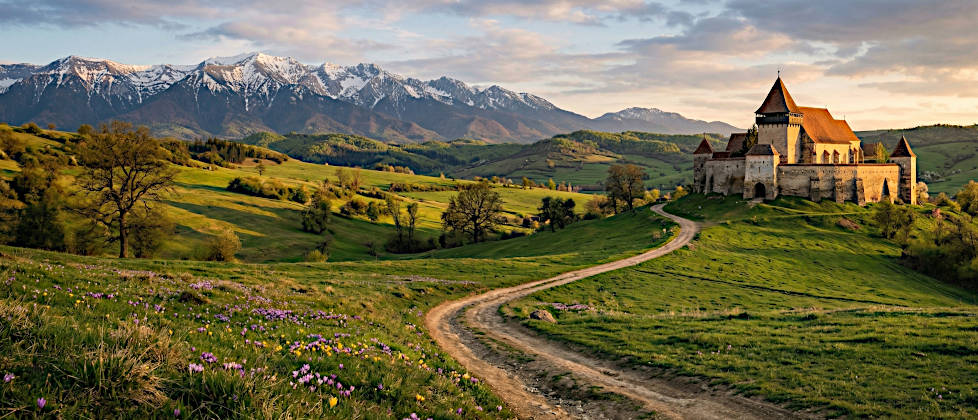
Ein Feldweg im Frühling vor einer historischen wehrhaften Kirchenburg in Siebenbürgen, im Hintergrund die schneebedeckten Karpaten.

When the last snowfields in the Romanian Carpathians melt at the end of March and the first wildflowers bathe the valleys in a delicate green, Transylvania reveals its most authentic side. Forget the overcrowded Bran Castle or the classic Dracula myths. Transylvania in spring is a place of longing for true explorers, individual tourists, and lovers of rugged nature and centuries-old culture.

Why Transylvania in Spring is Ideal for Individualists

The late March and early April sun wakes the sleepy villages from their winter slumber. The air is still crisp, but the roads are free from the summer tourist crowds. Now is your chance to immerse yourself in authentic rural life and experience the warm hospitality of the locals unfiltered.

Transylvania Insider Tips: Hidden Gems Off the Trail

1. The Fortified Churches of Mălâncrav and Cincșor

While Viscri is now well-known to many, you will still find absolute tranquility in villages like Mălâncrav (Malmkrog) or Cincșor (Kleinschenk). These fortified churches, built by the Transylvanian Saxons, sit majestically in the rolling hills. In spring, you can stroll for hours through the old apple orchards here without meeting a single soul.

2. The Apuseni Mountains (Western Carpathians)

For nature lovers, the Apuseni Nature Park is an absolute must. The karst mountain range is riddled with caves, gorges, and dense forests. A hike to the Cetățile Ponorului (Fortresses of Ponor) is particularly impressive right now, as the meltwater rivers give enormous power to the waterfalls and underground cave systems.

3. The Astra Open-Air Museum in Sibiu – Almost All to Yourself

Admittedly, Sibiu is no longer a secret. But the Astra Museum, located just outside the city and one of the largest open-air museums in Europe, truly unleashes its magic on a clear spring day. Strolling between the historic mills and crooked wooden houses on the lakeshore is wonderfully peaceful.

Culinary Discovery Tour: Hearty, Honest, Local

Romanian cuisine is just like the landscape: wild, hearty, and heartwarming. After a long spring hike, there is nothing better than stopping for a bite and tasting the real Transylvania:

  • Ciorbă de fasole cu afumătură: A rich bean soup with smoked meat, traditionally served in a hollowed-out loaf of bread. It is eaten with fresh red onions.
  • Sarmale: Cabbage rolls stuffed with minced meat and rice, often braised for hours in a clay pot. Accompanied by mămăligă (polenta) and a generous dollop of smântână (sour cream).
  • Papanași: The king of desserts! A fried dough pastry made with sweet cheese, covered in sour cream and homemade blueberry or sour cherry jam.

Practical Tips for Your Transylvania Road Trip

To explore these Transylvania insider tips on your own, a rental car is essential. The main roads are very well maintained, but to get to the truly untouched places, you will also have to drive on gravel roads. Use small guesthouses (pensiunea) instead of large hotels; here, your money flows directly into the local community, and you will get the best insider tips.


Are You Ready for Your Transylvania Adventure?

Pack your hiking boots, download offline maps, and embark on your Transylvanian adventure. Drum bun (Have a good trip)!

Now it’s your turn: Have you ever traveled to Romania or are you currently planning your first trip there? What is your personal insider tip for individual tourists? Be sure to let me know in the comments below – I look forward to hearing from you!

Januar 2017

In January, I use my remaining vacation days to drop by Cincu (Großschenk) again. This time I chose the date deliberately. Not (only) because of the construction progress, but because of a historic event: For the first time in over 25 years, an Urzelnlauf (Run of the Loles) is taking place this weekend. Continue reading “Januar 2017”

Forgotten Transylvania: Why a visit to Gürteln (Gherdeal) is worth it

Verfallene sächsische Häuserzeile im fast verlassenen Dorf Gherdeal (Gürteln) in Siebenbürgen mit bröckelnden Fassaden.

Imagine someone pressed the pause button thirty years ago and then left the room. That is exactly what arriving in Gherdeal (German: Gürteln) feels like. When you turn off the main road and approach the village via the dusty, unpaved track, you instantly leave the hustle and bustle of the 21st century behind you.

I first visited Gherdeal in September 2016. The month before, I had bought a house in neighbouring Cincu (Großschenk) and was busy getting to know the surroundings on the one hand, and looking for historical building materials to renovate my house on the other. Continue reading “Forgotten Transylvania: Why a visit to Gürteln (Gherdeal) is worth it”

Planting Winter Garlic in October: Guide & Experiences from My Garden

In October, when the morning fog hangs in the valley, the most important time in the gardening year begins for me. While others are putting their beds to rest for the winter, I am putting hope for next year into the ground: Winter garlic.

Many ask me: “Why do you plant garlic just before the frost?”
As a hobby gardener in Romania, I have learned that the timing determines the size of the bulb. Here is my guide, based on the clay soils of Transylvania, but applicable to any organic garden.

The Biological Logic: Why October?

October is not chosen by chance. I am using a biological mechanism here called vernalization. For garlic (Allium sativum) to form large bulbs next year, it needs a cold stimulus.

If planted from mid to late October, the following happens:

  1. Root Formation: The soil still holds residual warmth. The clove forms strong roots but no green shoots yet (which would freeze in winter).
  2. Winter Dormancy: The plant rests beneath the frost.
  3. Spring Boost: As soon as the soil thaws, this garlic has a huge head start over cloves planted in spring. It makes optimal use of winter moisture.

🌿 At a Glance: Key Data for Cultivation

  • Planting Period: October 15th to early November (before permanent ground frost).
  • Planting Depth: 5 to 7 cm (deeper than in spring!).
  • Planting Distance: 10-15 cm in the row, 25 cm between rows.
  • Location: Full sun, no waterlogging.

Guide: How I Proceed Step by Step

Planting garlic is precise craftsmanship. If you are sloppy here, you will only harvest tiny cloves. This is how I do it in my garden:

1. Preparing the Planting Material
I never use garlic from the supermarket (often chemically treated against sprouting or from the wrong climate zone). I use seed garlic from the region.
Important: I only break open the bulbs immediately before planting. I choose only the large outer cloves. The small inner cloves go into the kitchen – if you plant small, you harvest small. The protective skin of the clove must not be damaged.

2. Preparing the Soil
Garlic is a moderate feeder but dislikes fresh manure. I loosen the soil deeply with a digging fork to prevent waterlogging. Waterlogging in winter is the death of any garlic clove (risk of rot).

3. The Right Technique for Planting
I draw seed furrows or make individual holes. The clove goes into the earth with the root end facing down.

  • The Mistake: Many press the clove too hard into the ground. This compacts the soil directly under the root and inhibits growth. I place it in gently and cover loosely with soil.

4. Frost Protection through Mulching
Since we can have harsh winters here in Cincu, I cover the bed after planting with a thin layer of leaves or straw. This protects against bare frosts and keeps the soil alive.

Patience is the Main Ingredient

Once the cloves are in the ground, the work is done. Winter garlic is the most rewarding crop for us gardeners. It grows while we sit inside by the warm stove. Harvesting usually takes place in July, when two-thirds of the leaves have turned yellow.

Whoever picks up the spade now in October will be rewarded in summer with a taste that money can’t buy.

Romania – Your Dream Destination for Breathtaking Nature and Landscape Photography

Imagine this: endless forests, mystical mist-covered valleys, wild Carpathian peaks, and remote villages that look like they’re frozen in time. If You’re into nature and landscape photography, Romania is a true paradise! You’ll find untouched nature, incredible biodiversity, and lighting conditions that will make Your camera sing. Continue reading “Romania – Your Dream Destination for Breathtaking Nature and Landscape Photography”

Großschenker walnut bread

Walnussbrot

Ingredients:

  • 500 g rye flour or wheat flour (depending on preference)
  • 100 g chopped walnuts
  • 1 packet of dry yeast or 25 g of fresh yeast
  • 1 teaspoon salt
  • 1 tablespoon honey or sugar
  • 300 ml of lukewarm water
  • 2 tablespoons olive oil (optional)

Preparation:

  1. Yeast preparation :
    If using fresh yeast, dissolve it in some of the lukewarm water with honey or sugar and let it rest for about 10 minutes until it foams.
  2. Make the dough :
    Place the flour in a large bowl. Add salt, olive oil (if using) and the dissolved yeast. Gradually add the remaining water until you have a smooth dough.
  3. Incorporate walnuts :
    Knead the chopped walnuts evenly into the dough. The dough should be elastic but not too sticky. If necessary, add a little flour or water.
  4. Let the dough rise :
    Cover the dough and let it rise in a warm place for about 1-2 hours, until it has doubled in volume.
  5. Forming and letting it rest :
    Knead the dough again briefly, shape it into a loaf and place it on a baking tray lined with baking paper. Alternatively, you can use a bread tin. Let it rest for another 30 minutes.
  6. Baking :
    Preheat the oven to 220°C (top/bottom heat). Place a bowl of water on the bottom of the oven to create steam – this will make the crust crispy. Bake the bread for about 35-40 minutes until it is golden brown and sounds hollow when tapped on the bottom.
  7. Allow to cool :
    Allow the bread to cool completely before slicing.

Tip:

This bread goes perfectly with savory toppings like cheese or sweet spreads like honey – and of course on its own with butter!