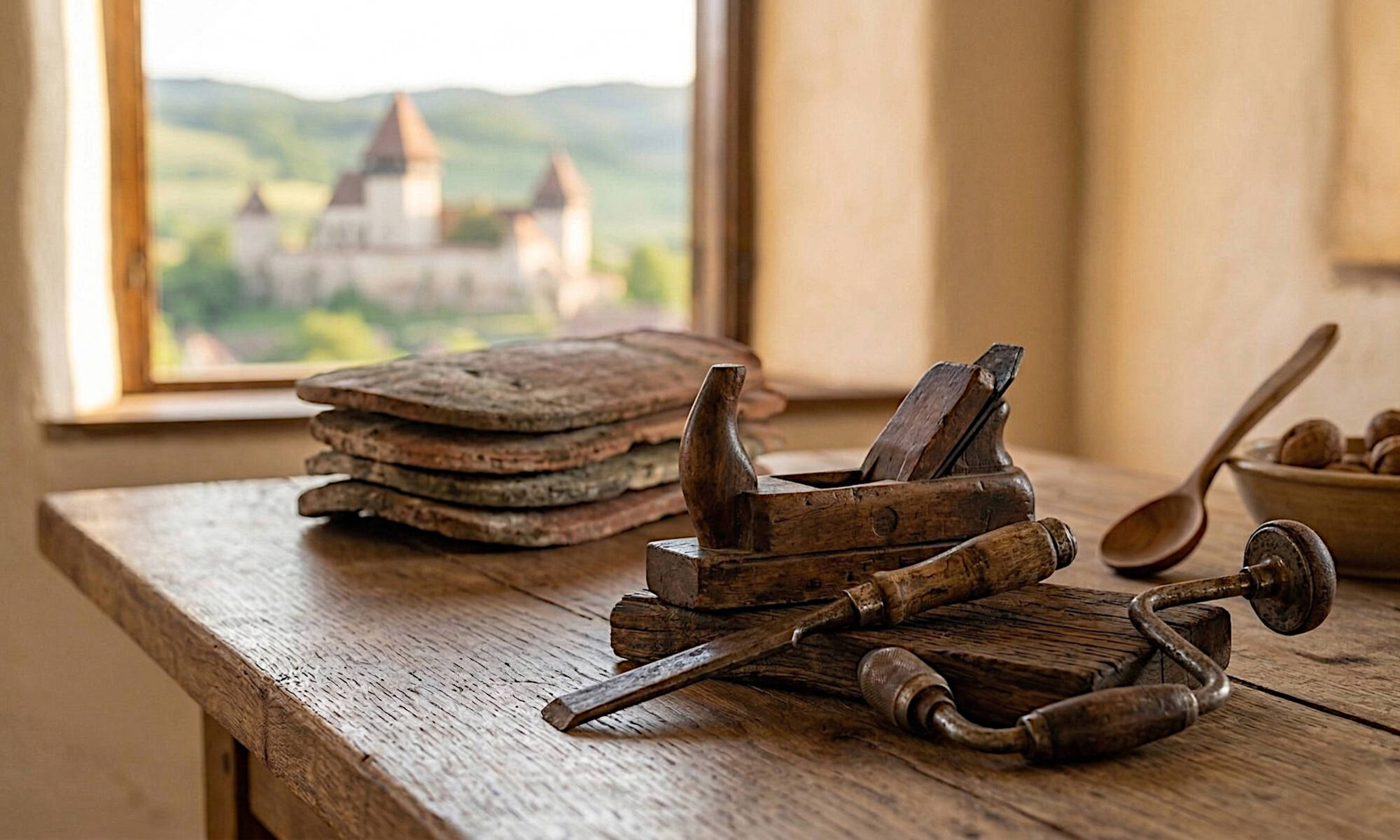
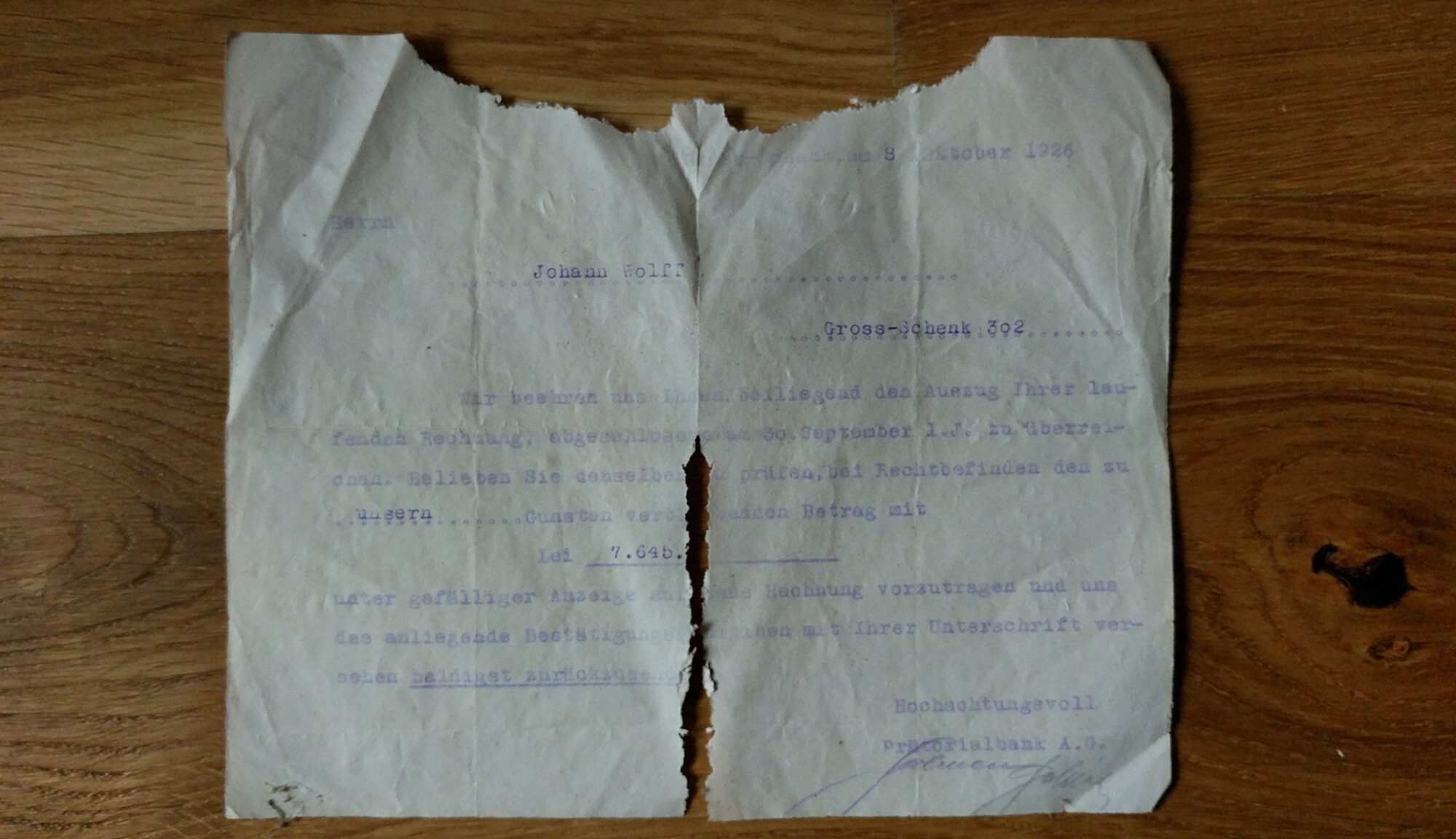
A 1926 bank statement found in my house in Cincu: a quarterly statement sent to joiner Johann Wolff, and its forgotten etiquette.
A look into the bookkeeping of days gone by
While restoring my house I keep coming across small time capsules. Today’s find is another document of contemporary history: a historical quarterly statement.
Summary: In this post we look at a historical document from my house that gives a fascinating insight into the banking culture of days gone by. The focus is not only on the quarterly statement itself but on the appreciative tone and the personal etiquette in the communication between bank and customer, which differs markedly from today’s automated mass correspondence.
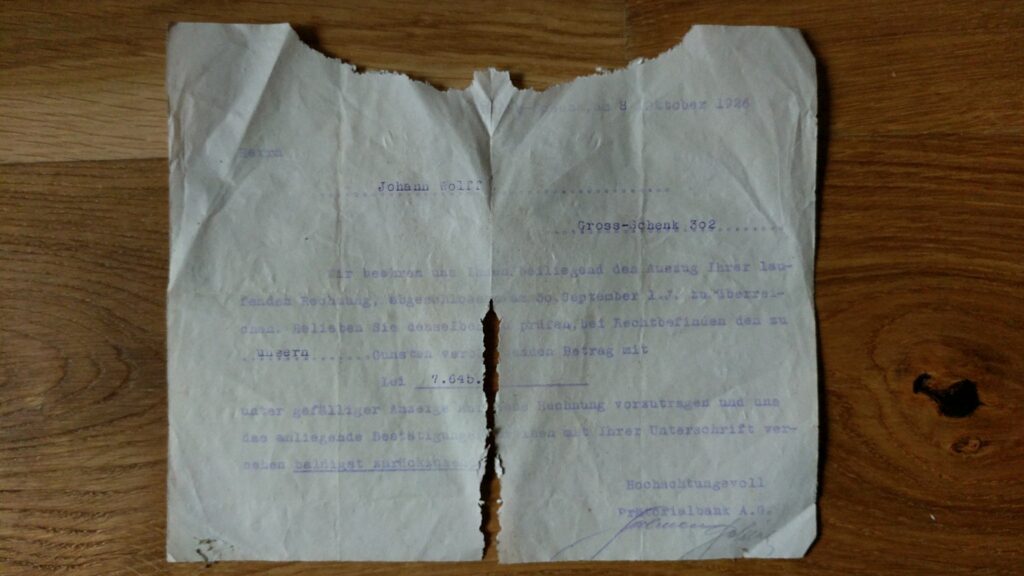
In case anyone cannot read it, the text of the letter reads as follows (translated from the German):
Mr
Johann Wolff
Groß-Schenk, 302
8 October 1926
We have the honour of sending you enclosed the statement of your current account, closed on 30 September of this year. Kindly check it and, if you find it correct, carry forward the amount due in our favour of
Lei 7,645.—
with due acknowledgement of receipt of the statement, and return the enclosed letter of confirmation to us bearing your signature.
Yours faithfully
Preatorialbank A.G.
The story behind the slip:
Why this find is so valuable
In today’s digital world, documents like this seem to come from another age. The combination of the typical typography of an old typewriter and the flowing hand of the handwriting tells of the bookkeeping of the time.
What strikes you immediately about this slip is the remarkable tone of the correspondence. Where today we receive standardised mass e-mails, this quarterly statement testifies to an almost respectful, formal relationship between institution and customer. It is a document of appreciation, showing that banking was once a very personal matter.
Frequently asked questions about historical finds in a house (FAQ)
To show why documents like this are so interesting to me, I have summarised the most important questions here:
What do old account statements reveal about a house?
They shed light on the financial circumstances, on former residents and often also on the use of individual rooms or of land that belonged to the property.
What is the best way to store old paper finds?
Paper is sensitive to light and moisture. Storing it in acid-free sleeves in a dark, dry place is ideal for halting decay. In my opinion, digitising is a good way of preserving old documents for posterity when the content matters more than the document as a whole.
Why are handwritten notes on typescripts important?
They make the document individual. Often it is precisely these notes that contain information about people or events missing from official registers. In any case they show the value that communication had at the time. People took care to write in their finest hand – also as a mark of respect for the other person.