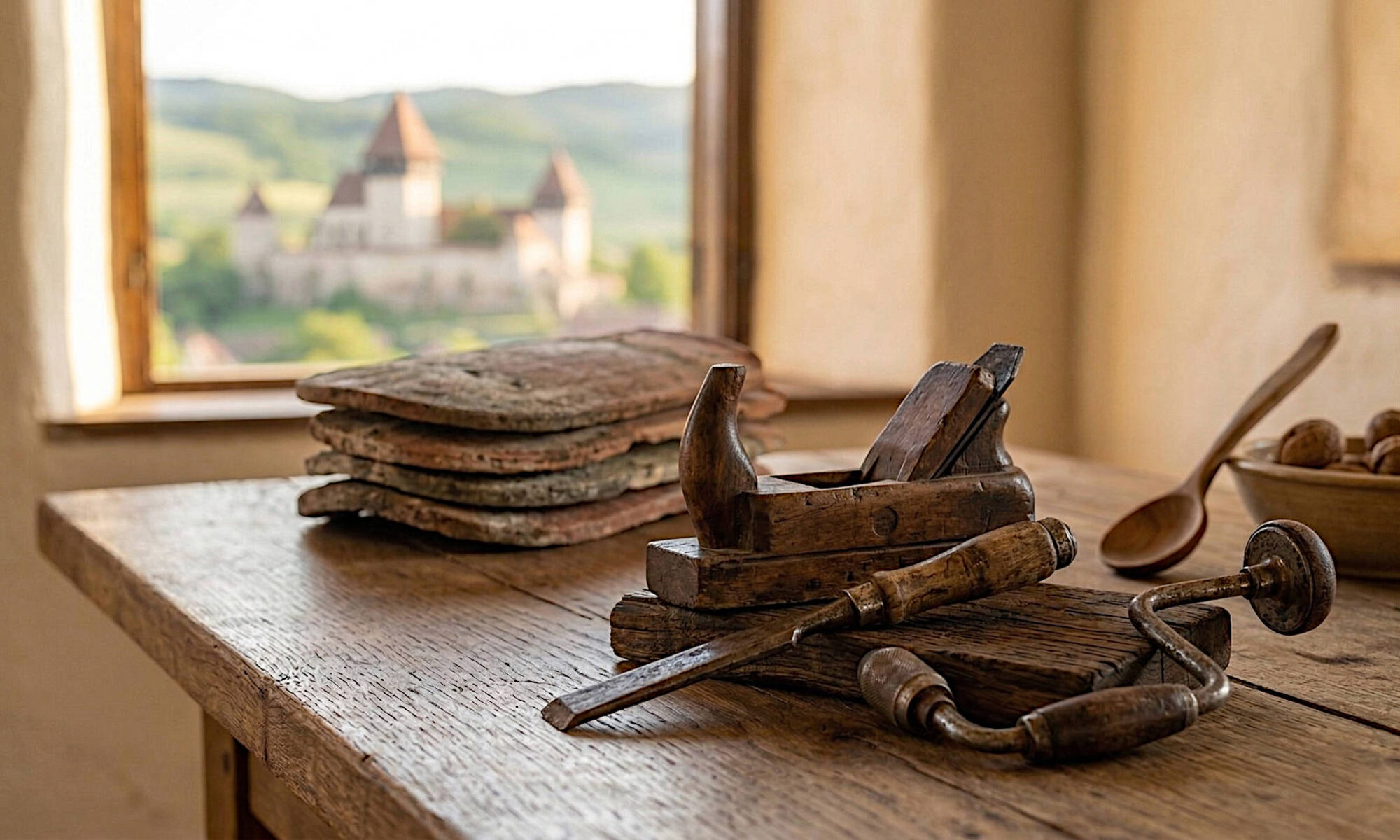
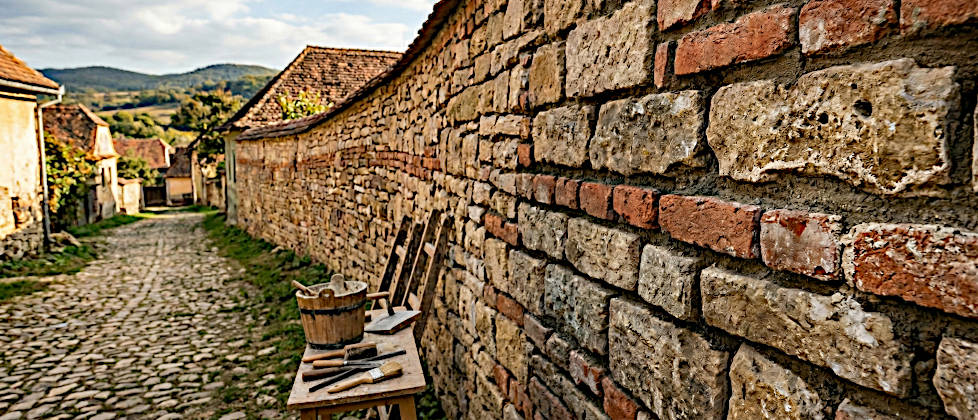
Renovating a 150-year-old building comes with many challenges. One of the most severe mistakes made with old buildings is the use of modern building materials like cement or synthetic resin-based plasters. These materials seal the historical masonry, trap moisture, and inevitably lead to massive structural damage.
The only professional solution for preserving old building fabric is a return to a traditional binder: lime. In this post, I will show in detail how lime mortar is used for masonry and plastering, and which special techniques are necessary for damp areas such as plinths, garden walls, and even the bathroom (Tadelakt).
1. Lime Mortar for Masonry: Flexibility for Old Stone
When repairing load-bearing walls or laying new historical stones, a pure lime mortar is essential. It adapts to the thermal and static movements of the old house.
- The mixing ratio: For a classic masonry mortar, mix 1 part lime putty (slaked for at least 12 months) with 3 parts sharp sand (grain size 0-4 mm).
- Application: Historical bricks and natural stones absorb water extremely quickly. If they are laid dry, they extract the water from the mortar before it can set (it “burns”). Extensive pre-wetting of the stones is therefore absolutely mandatory.
- The setting process: Pure non-hydraulic lime does not harden by drying out, but by absorbing carbon dioxide (CO2) from the air (carbonation). This process is slow and requires a certain basic moisture.
2. Lime Mortar for Plastering: The Breathing Skin of the Wall
A pure lime plaster is the best insurance against mold. Due to its naturally high pH value (alkaline), it deprives mold spores of any basis for life. Additionally, it absorbs moisture when humidity is high and releases it when the air is dry.
- Base coat (leveling plaster): Here, coarse sand (0-4 mm) is mixed with lime in a 1:3 ratio. The plaster is thrown onto the wall, not spread, to achieve optimal mechanical interlocking with the deeply raked joints.
- Top coat (finishing plaster): Fine sand (0-1 mm or 0-2 mm) is used for the visible layer. I pay special attention to the texture here: a slightly uneven lime plaster, rubbed with a sponge float, casts a wonderfully soft light that gives old rooms their true character.
3. Lime Mortar in Damp Areas: Plinths and Garden Walls
Here we reach the limits of normal non-hydraulic lime. Areas permanently exposed to heavy moisture or even splashing water (foundations, the exterior plinth of the house, or freestanding garden walls) require a different approach. Non-hydraulic lime does not set under wet conditions and would be washed away.
The solution is hydraulic lime.
Using Natural Hydraulic Lime (NHL)
NHL (Natural Hydraulic Lime) is burnt from special limestones that naturally contain clay minerals. These clay components ensure that the lime hardens not only through CO2 from the air but also through a chemical reaction with water. It becomes stronger than non-hydraulic lime and is frost- and water-resistant, yet remains breathable and softer than cement.
The Plinth Plaster as a Sacrificial Plaster
In the plinth area, the masonry often draws salt-laden moisture from the ground. Here, a special plinth plaster made of NHL (usually NHL 3.5 or NHL 5) and coarse, open-pored sand is applied. This plaster acts as a “sacrificial plaster”. It allows the water to evaporate while the harmful salts crystallize on the plaster surface. After 10 to 15 years, this plaster becomes saturated, crumbles off, and is renewed. The historical masonry behind it, however, remains intact.
Pozzolans: The Roman Technique for the Garden Wall
If no NHL is available, normal lime putty can be made hydraulic by adding pozzolans (e.g., brick dust from crushed old roof tiles or volcanic trass). The Romans already used this technique for their aqueducts. The brick dust reacts with the lime and makes it waterproof – ideal for the tops of garden walls that are exposed to rain without protection.
4. Tadelakt: Waterproof Lime for Bathroom and Kitchen
The antique Moroccan plastering technique Tadelakt proves that lime can also be highly water-repellent. It is the perfect, seamless alternative to modern tiles in a historical farmhouse.
Tadelakt uses a special, strongly hydraulic shell lime. It is applied in several thin layers. The crucial step is compaction: before the plaster fully hardens, the surface is polished with a smooth semi-precious stone (e.g., agate) under strong pressure in small, circular movements. Finally, pure olive oil soap is applied. The fatty acids of the soap react with the highly alkaline lime to form water-insoluble lime soap.
The result is a fascinating, slightly wavy surface that is waterproof but remains breathable. It is perfectly suited for shower walls or as a splashback in a country kitchen. Visually, Tadelakt offers a depth and liveliness that industrially manufactured tiles can never achieve.
Step-by-Step: Mixing Plinth Plaster for Damp Masonry
Since the plinth area is the most common problem zone in old houses, here is the exact procedure for a breathable renovation plaster based on hydraulic lime.
- Preparation and raking joints: Completely remove all old cement plaster from the plinth. Rake out the joints of the historical masonry to a depth of at least 2 to 3 centimeters. Brush the entire surface dry.
- Intensive pre-wetting: Wet the masonry intensively with a masonry brush or a fine spray. Ideally, start this the evening before. The stone must be damp, but matte on the surface (not wet and shiny).
- Mixing the mortar: Mix the natural hydraulic lime (NHL) with the sand in a ratio of 1:2.5 to 1:3. Add only enough water to create a plastic, well-adhering mass. The mortar must not be too liquid.
- Throwing on the plaster: Throw the plaster vigorously onto the wall with the trowel, using a flick of the wrist. This throwing action is absolutely necessary to press the mortar deep into the raked joints. Afterward, only roughly level the plaster and leave the surface rough so it can absorb and release plenty of moisture.
- Aftercare: Protect the fresh plinth plaster from direct sunlight and strong wind. Keep it slightly damp for the next 2 to 3 days (mist it regularly) so the hydraulic lime can set optimally.